
Last Updated: 4 November 2026
Quick Summary
The right welding gloves depend on your welding process, since TIG needs thin, flexible leather while MIG and stick welding need thicker, heat-resistant gloves. Check the EN 12477 type and size carefully before buying.
- TIG welding suits thin, pliable leather that keeps fingertips sensitive for fine control.
- MIG welding needs thicker leather, longer cuffs and reinforced stitching to resist spatter.
- Stick welding produces the most heat, so choose heavier gloves with full palm and forearm protection.
- Type A EN 12477 gloves suit MIG and stick work, while Type B gloves suit TIG work.
- Measure your dominant hand across the knuckles and check fit by closing your hand into a fist.
Table of Contents
- Start With the Welding Process You Use
- Choosing the Right Glove Material
- Checking Welding Glove Safety Standards
- Finding Your Fit: The Welding Glove Size Guide
- Layering, Inspection and When to Replace Your Gloves
- Ordering Welding Gloves From Norsemen Safety
- Frequently Asked Questions
Start With the Welding Process You Use
Choosing welding gloves starts with one question: which welding process are you doing? TIG, MIG and stick welding each place different demands on your hands, so a glove that suits one can feel wrong for another. Getting this step right saves you money and keeps your hands protected.
Browse our welding gloves range to see what is available before you decide.
Each process has its own priorities. Use the sections below to match your gloves to the work you do most often. If you are still unsure which process fits your work, read our MIG vs TIG welding gloves comparison for a clear breakdown.
TIG Welding Gloves: Dexterity First
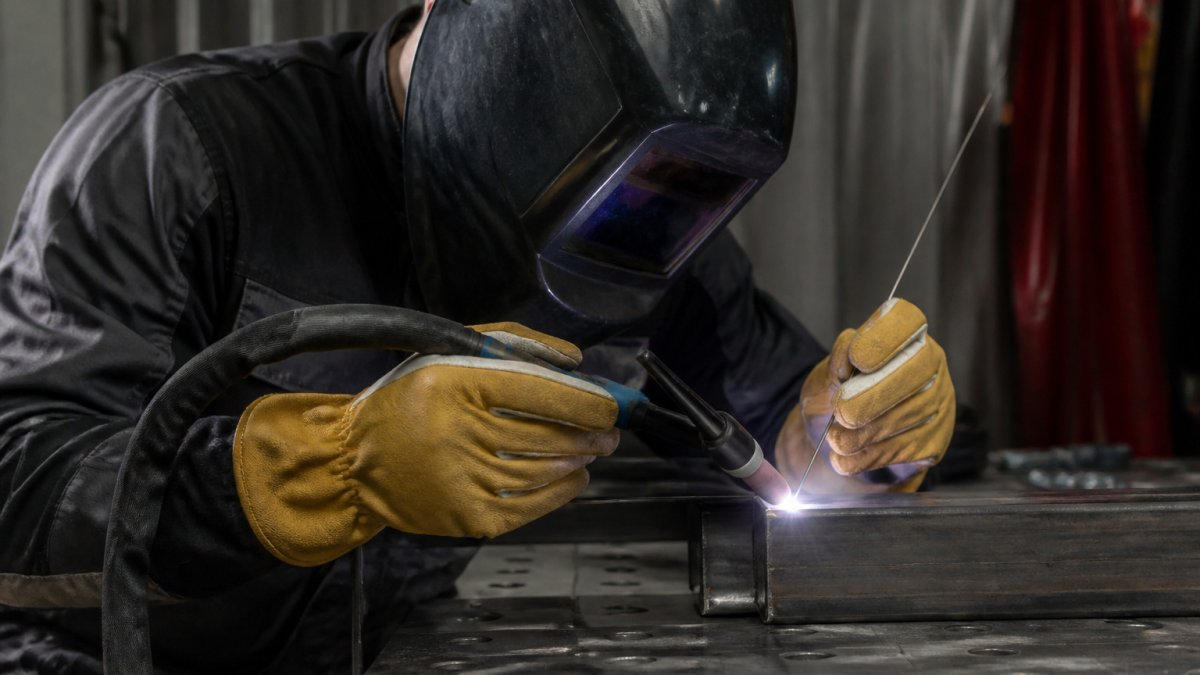
TIG welding needs precise control. You feed filler rod with one hand while working the torch with the other, so thin, flexible gloves are the usual choice. Look for soft leather that lets your fingers move freely.
- Thin, pliable leather for fine control
- Snug fit so fingertips stay sensitive
- Enough heat protection for low-spatter work
MIG Welding Gloves: Spatter and Heat Protection
MIG welding throws off more spatter and heat than TIG. Gloves for this process need thicker leather and a secure cuff to keep sparks out. Durability matters more here because you will wear them harder.
- Thicker leather that resists spatter
- Longer cuffs that cover the wrist
- Reinforced stitching for longer wear
Stick and Arc Welding Gloves: Maximum Protection
Stick and arc welding produce the most heat, slag and spatter of the three. Choose heavier gloves with full protection across the palm, back of the hand and forearm. Protection here comes before dexterity.
Choosing the Right Glove Material
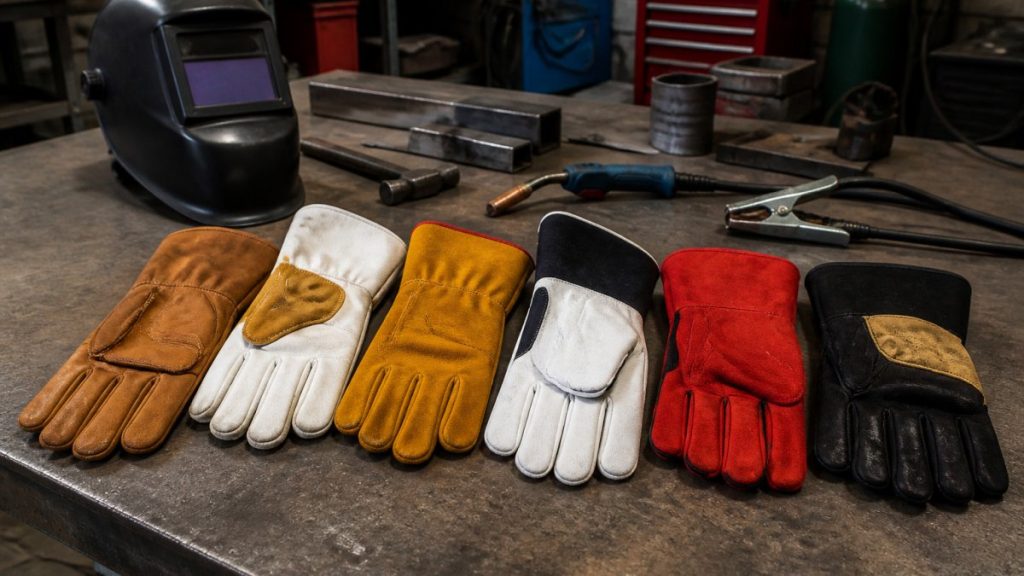
Leather is the standard material for welding gloves, and the type of leather changes how the glove performs. Our guide to the best welding gloves for MIG, TIG and stick welding explains which materials suit each process. Goatskin is soft and flexible, which suits TIG work. Cowhide is tougher and handles heavy spatter, which suits MIG and stick welding.
Many welders find that a goatskin glove feels better for long, detailed jobs, while cowhide lasts longer on rough work.
Check the lining and seams too. A cotton or Kevlar lining helps with comfort and heat, and well-stitched seams stop gaps where sparks can get through.
Our Spiderhand TIG and MIG welding gloves are one option to compare if you want a glove suited to both processes.
Checking Welding Glove Safety Standards
A welding glove should carry a recognised standard mark, and the mark is only useful if you can read it. In the UK and Europe, the relevant standard for welding gloves is EN 12477, which sets requirements for heat and mechanical protection and divides gloves into two performance types (British Standards Institution).
Type A gloves are designed for higher heat and mechanical protection, which suits MIG and stick welding where spatter and radiant heat are constant. Type B gloves prioritise dexterity and are intended for TIG work, where fine control matters more than maximum heat resistance. The type is usually printed on the glove or its packaging alongside the standard number.
A higher number is not automatically better for every job. A glove with maximum abrasion resistance may be stiff and bulky, which is the wrong trade-off for TIG work. Match the levels to your actual exposure: heavy spatter and slag call for strong contact-heat and molten-metal ratings, while precision work calls for a glove that still meets the minimum heat requirements without sacrificing feel.
A standard mark confirms the glove was tested to a defined level, but it does not replace a risk assessment for your own workplace. If your work involves sustained high heat, heavy spatter or combined hazards, check that the ratings cover each risk rather than assuming one pictogram covers them all.
Keep the packaging or product sheet so you can check the ratings later, and compare gloves on the same criteria rather than on price or appearance alone.
The table below summarises the two EN 12477 glove types and what each is designed for.
| Glove type | Best for | Key difference |
|---|---|---|
| Type A | MIG and stick welding | Higher heat and mechanical protection |
| Type B | TIG welding | Prioritises dexterity over maximum heat resistance |
| Standard | EN 12477 | Sets heat and mechanical protection requirements |
| Marking | Printed on glove or packaging | Check type and standard number before buying |
Finding Your Fit: The Welding Glove Size Guide
A glove that is too loose slips and reduces control. A glove that is too tight restricts movement and wears out faster. Getting the fit right is a short procedure, but it needs to be done consistently.
Measure your dominant hand, since that is the one that does the most work. Wrap a flexible tape measure around the widest part of your hand, across the knuckles and just below the fingers, without including the thumb. Note the measurement in centimetres and compare it to the manufacturer’s size chart, because sizing varies between brands. If you are between sizes, size up for MIG and stick work where you may wear a liner, and size down for TIG work where fingertip sensitivity matters.
Then run a fit check before you commit to a pair:
- Close your hand into a loose fist and check for pinching across the knuckles and the back of the hand.
- Bend each finger in turn and confirm the fingertips reach the ends of the glove fingers without pressing against them.
- Spread your fingers and check the material does not pull tight across the palm.
- Hold a filler rod or torch and check your grip feels secure without the glove twisting.
- Flex your wrist and check the cuff does not ride up or dig in.
A glove is too tight if your fingertips go numb, if the leather creases sharply across the palm when you grip, or if you cannot fully close your hand. It is too loose if the glove twists on the wrist, if the fingers extend well beyond your own, or if you cannot feel the rod through the leather.
Watch out: a glove that feels right in the shop can behave differently once it heats up. Leather softens and can stretch slightly with use, so a glove that is borderline tight at first may become uncomfortable during a long session, while a loose glove stays loose.
Some gloves run large or small, so read reviews or ask for advice if you are between sizes, and try the fit check again once you have worn the gloves for a short session.
Layering, Inspection and When to Replace Your Gloves
Some welders wear a thin liner under a welding glove for extra warmth, but only use a liner if it does not reduce your protection or control. Check that any layer still fits inside the cuff of your gloves and does not bunch up.
Inspect your gloves before each shift. Look for holes, scorching, stiff or cracked leather, and loose seams. Replace gloves that show any of these signs, because damaged gloves stop protecting your hands.
Store gloves in a dry place away from solvents and oil, which can break down leather over time.
Ordering Welding Gloves From Norsemen Safety
Norsemen Safety supplies welding and safety equipment across the UK and Ireland, backed by over 40 years of industry experience. Our team can help you match gloves to your process, and Buy Now, Pay Later is available through PayPal.
Pricing depends on quantity, dates and delivery, so check our website for current prices or request a quote. When you are ready, shop the welding gloves range and pick the pair that suits your work.
Frequently Asked Questions
How do I choose the right welding gloves?
Start with the welding process, since TIG, MIG and stick welding place different demands on a glove. TIG work needs dexterity and fine control, so thinner, pliable leather suits it. MIG work involves more spatter and heat, so gloves with good heat resistance and a sound lining are better. Stick and arc welding usually call for heavier, more protective gloves. Then check fit, material and the relevant safety rating before you buy.
What is the difference between TIG and MIG welding gloves?
TIG welding gloves are generally thinner and more flexible, because the welder needs to feel the torch and filler rod precisely. MIG welding gloves are usually thicker and offer more protection against weld spatter and radiant heat, since the process throws off more molten metal. Many welders keep one pair for each process rather than trying to use a single glove for every task.
How should welding gloves fit?
Welding gloves should be snug across the palm and fingers without restricting movement. Excess material at the fingertips reduces control, while a glove that is too tight will tire the hand quickly. Cuff length should cover the wrist and ideally overlap the sleeve of your jacket. Measure your hand circumference across the knuckles and compare it with the manufacturer’s size chart before ordering.
When should welding gloves be replaced?
Replace welding gloves when they show holes, thinning in the palm, burnt or hardened leather, loose stitching or a lining that has become exposed. Gloves that have become stiff, or that no longer grip well, also need replacing because their protective and dexterity properties have declined. Inspect them before each shift and remove any pair that is damaged, as a compromised glove will not protect you.