
Table of Contents
- Understanding MIG Welder Pricing
- MIG Welder for Beginners: Budget and Expectations
- Gasless MIG Welder Price: What You’ll Pay
- MIG Welder Accessories and Consumables: Hidden Costs
- Factors That Affect MIG Welder Price
- Getting Value for Money
- Frequently Asked Questions
Last Updated: October 6, 2026
Understanding MIG Welder Pricing
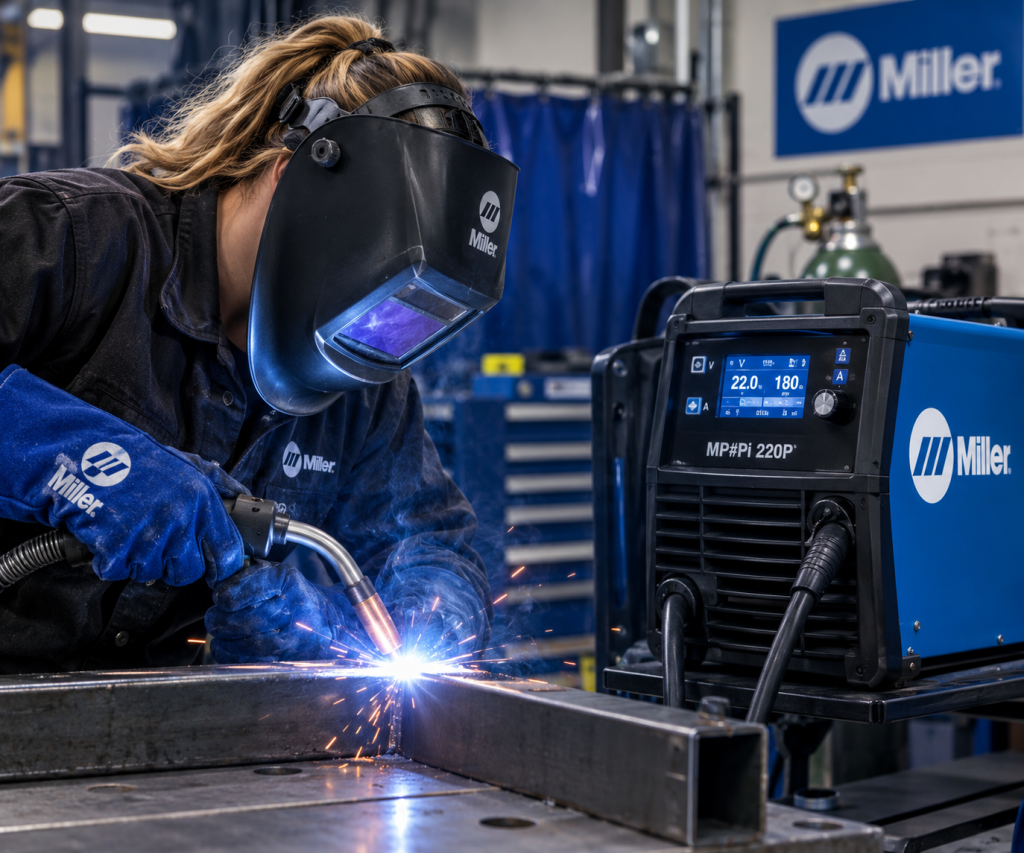
A MIG welder price in the UK varies significantly based on equipment type, power output, and intended use. Whether you’re setting up a small fabrication workshop or equipping an industrial facility, understanding what drives costs is essential for making an informed purchase decision.
MIG welding equipment ranges from portable, entry-level units suitable for hobbyists to heavy-duty industrial machines designed for continuous production. The price differences reflect not just the machine itself, but the capabilities, durability, and support you’re getting. At Norsemen Safety, we’ve worked with welders across the UK and Ireland for over 40 years, understanding how the right equipment choice directly impacts both safety and productivity on site.
Several factors influence MIG welder price. Machine capacity, duty cycle, build quality, brand reputation, and included accessories all play a role. A budget unit might cost considerably less upfront, but ongoing consumables, maintenance, and potential downtime can quickly offset those savings. Understanding these variables helps you calculate true cost of ownership rather than just the initial purchase price.
MIG Welder for Beginners: Budget and Expectations
If you’re new to MIG welding, starting with the right equipment matters more than you might think. MIG welder for beginners models typically focus on ease of use, reliability, and straightforward operation over advanced features you won’t need immediately.
Entry-level MIG welders are designed to be forgiving. They handle variable input power more gracefully, feature simplified controls, and often include useful accessories like a earth clamp and work cable. These machines prioritise getting you welding quickly rather than offering professional-grade performance.
What beginners often overlook is that cheaper equipment sometimes demands more operator skill to produce acceptable welds. A budget machine might require constant adjustment, produce inconsistent results, and frustrate you into abandoning the hobby. Mid-range equipment, by contrast, delivers more predictable performance and actually teaches you proper technique rather than fighting the machine.
Consider what you’ll actually be welding. Thin sheet metal, small repairs, and light fabrication don’t require the same investment as structural work or production runs. Be honest about your volume and intended applications before committing to any particular price point.
Gasless MIG Welder Price: What You’ll Pay
Gasless MIG welder price options appeal to many because they eliminate the need for bottled shielding gas, which adds ongoing cost and logistical complexity. These machines use flux-cored wire that generates its own shielding, making them portable and practical for site work.
Gasless machines typically cost slightly less than comparable gas-fed units, but that initial saving can be misleading. Flux-cored wire is more expensive per unit than solid wire, and the consumables add up quickly on high-volume jobs. You’ll also get more spatter with gasless equipment, which means more clean-up and potential rework.
The real advantage of gasless MIG welders is portability and convenience. You’re not managing gas bottles, regulators, or supply chains. For small jobs, repairs, and outdoor work where gas bottles are impractical, the trade-off makes sense. For production work or precision welding where weld quality is critical, gas-shielded equipment usually delivers better results and lower per-weld costs.
Weather also matters. Wind and rain affect gasless operation less than gas-shielded welding, making gasless units genuinely useful on exposed sites. If your work is mostly outdoors or in poorly ventilated spaces, gasless equipment might be the practical choice regardless of price.
MIG Welder Accessories and Consumables: Hidden Costs
Many people focus entirely on the machine price and overlook what actually determines your total investment. MIG welder accessories and consumables represent ongoing, often substantial costs that dwarf the initial equipment purchase over time.
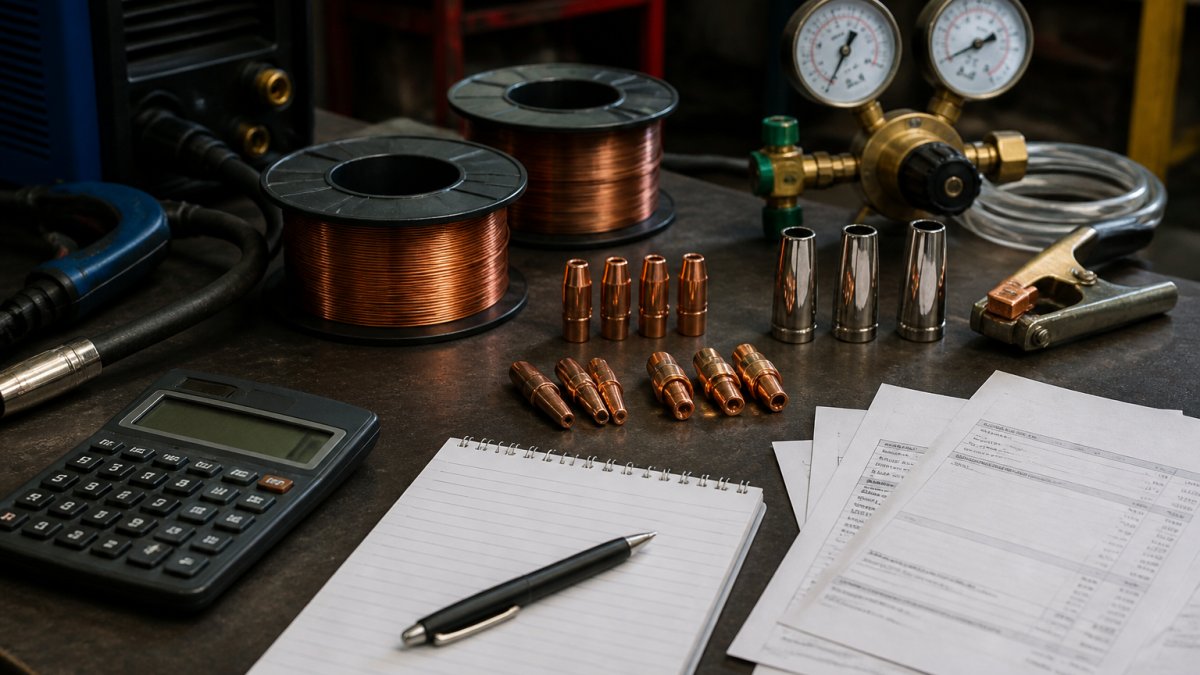
Wire is the most obvious consumable. A busy workshop can burn through multiple spools weekly. Different wire types, solid, flux-cored, stainless, cost differently and suit different applications. Contact tips wear out and need regular replacement, especially under heavy use. Nozzles collect spatter and require cleaning or replacement. Gas bottles need refilling or exchanging.
Less obvious costs include:
- Spare parts for the torch and cable assembly
- Replacement liners and springs for the wire feed mechanism
- Shielding gas (if using gas-fed equipment)
- Safety gear specific to MIG welding
- Maintenance supplies like cleaning wire and contact tip cleaners
A machine that costs £500 might generate £2,000 in consumable costs annually. Understanding your expected usage helps calculate whether a more expensive, efficient machine actually saves money long-term. Higher-end equipment often feeds wire more reliably and produces less spatter, reducing waste and consumable costs significantly.
Factors That Affect MIG Welder Price
Several practical considerations determine why two machines with similar specifications might have very different price tags.
Duty cycle is fundamental. A machine rated for 20% duty cycle can only run continuously for 2 minutes per 10-minute period before needing to cool. Professional machines rated at 60% or higher cost more but can handle real production demands. Buying a low-duty-cycle machine for continuous work leads to overheating, downtime, and frustration.
Input power requirements affect installation costs. A machine requiring 3-phase industrial power costs more to set up than a single-phase unit. If your workshop lacks proper electrical infrastructure, the machine price becomes secondary to the cost of installing suitable power supply.
Brand reputation and support aren’t trivial. Established manufacturers offer better spare parts availability, technical support, and resale value. An obscure brand might be cheaper, but finding replacement parts or getting technical advice becomes genuinely difficult. Norsemen Safety stocks equipment from trusted manufacturers specifically because we understand how important reliability and support are to professionals managing tight schedules.
Portability and size influence cost. Compact machines cost less but sacrifice some performance and duty cycle. Industrial-sized equipment costs more but handles serious workloads. Your workshop space and whether you need to move equipment between sites affects what makes sense.
Included accessories vary widely. Some machines come with minimal equipment; others include torches, cables, earth clamps, and wire. Buying these separately adds significant cost, so don’t ignore what’s actually in the box.
Getting Value for Money
The cheapest MIG welder price isn’t always the best investment. Value means getting reliable performance, adequate support, and manageable consumable costs for your specific application.
Start by defining your actual needs honestly. Will you weld occasionally or daily? Are you joining thin sheet metal or structural steel? Do you need portability or is the machine staying in one workshop? Will you be welding indoors or outdoors? Your answers determine which features justify their cost and which are unnecessary.
Research the machines you’re considering. Read reviews from people doing similar work to yours. Ask other welders in your area what they use and whether they’re satisfied. Check whether spare parts are readily available and whether the manufacturer offers decent technical support.
Consider total cost of ownership rather than just the purchase price. A machine that costs more upfront but produces less spatter, feeds wire reliably, and lasts longer often costs less to operate over five years. Factor in your expected wire consumption, maintenance costs, and downtime. A machine that breaks down frequently or requires constant adjustment is expensive in hidden ways.
Norsemen Safety can help you think through these decisions. Our dedicated team has the expertise to understand what equipment actually performs in real conditions. We stock quality machines from established manufacturers, and we’re happy to discuss your specific requirements to help you find equipment that delivers genuine value rather than just a low price.
Frequently Asked Questions
How much does a MIG welder cost?
MIG welder price varies significantly based on type, power output, and features. Entry-level hobby models cost less than professional-grade machines designed for heavy industrial use. Budget models suit occasional users, while commercial-grade welders for fabrication shops and construction sites command higher prices. Current pricing depends on quantity, delivery, and market conditions. Visit Norsemen Safety’s website for a quote tailored to your specific requirements and volume.
What should I budget for when buying a MIG welder for beginners?
Beginners should plan for more than just the welder itself. Factor in a suitable power supply or generator if needed, safety equipment including welding helmet and gloves, shielding gas or gasless wire depending on your setup, spare consumables like contact tips and nozzles, and a work bench or table. Many new welders underestimate these additional costs. Norsemen Safety stocks all these items, and our team can help you plan a complete starter setup within your budget.
Is a gasless MIG welder cheaper to run than a gas-shielded model?
Gasless MIG welders eliminate ongoing shielding gas costs, making them cheaper to operate long-term. However, they typically use flux-core wire, which costs more per spool than standard wire. Gasless models also produce more spatter and fumes, requiring better ventilation. For occasional hobby work, gasless is cost-effective. For production work or clean joints, gas-shielded models often prove more economical despite higher consumable costs. Compare both running costs and output quality for your specific work.
What extra equipment do I need to budget for with a MIG welder?
Beyond the welder, budget for a welding helmet with auto-darkening lens, leather gloves and apron, safety glasses, wire feed rollers for different wire types, spare contact tips and nozzles, shielding gas (unless gasless), a work clamp and cable, and potentially a gas regulator and flowmeter. Industrial users should add fume extraction equipment to meet HSE requirements. Consumables like wire and gas need regular replacement. Norsemen Safety offers all these items; our team can advise on what your operation requires.
When you’re choosing MIG welding equipment, the initial purchase is only the beginning of your investment. A machine that’s reliable, well-supported, and suited to your actual workload saves money and frustration over time. At Norsemen Safety, we stock MIG welders from trusted manufacturers alongside the consumables, accessories, and safety gear you need to work safely and efficiently. Shop our range now and talk to our team about finding the right equipment for your requirements.