
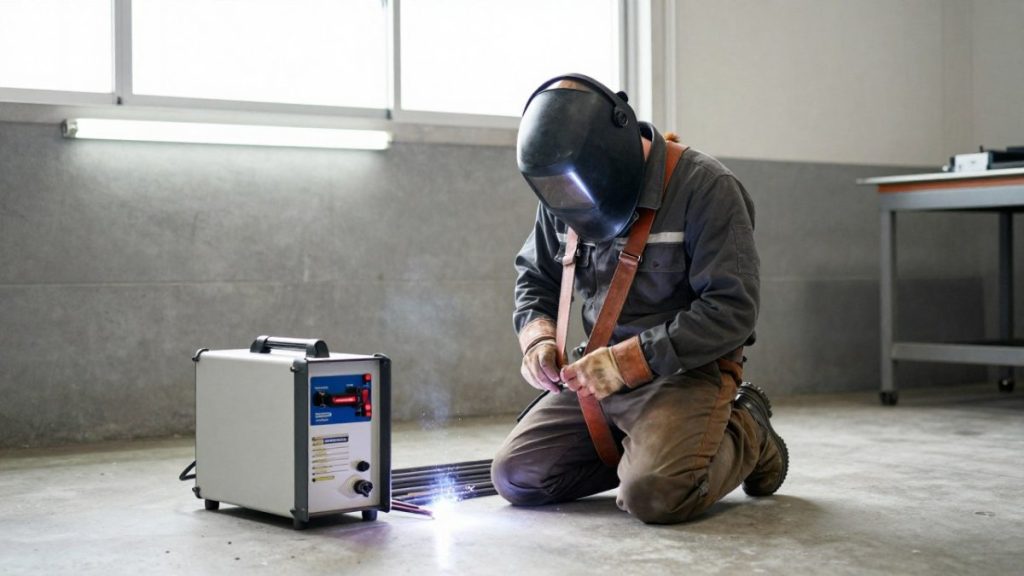
Quick Summary
Professional welding gear costs more because it is built to run for hours every day under demanding conditions. Higher duty cycles, tighter quality control, certified protective equipment and better warranty support all add to the price. Budget kit suits occasional use, but it can fail under commercial work.
- Check the stated duty cycle at your intended amperage, not just peak output.
- Look for PPE marked to recognised standards such as EN 388, EN 175 and EN ISO 11611.
- Estimate total cost of ownership using your annual arc hours and consumable spend per hour.
- Premium kit is poor value if you only weld occasionally for home repairs.
- Confirm replacement parts and warranty terms before buying any machine.
Table of Contents
- Why Professional Welding Gear Costs More Than Entry-Level Kit
- Build Quality, Materials and Component Quality
- Welding PPE: What Certification and Standards Add to the Price
- Welding Helmet Features That Justify a Higher Price
- Professional vs Budget Welding Equipment: Total Cost of Ownership
- Welding Consumable Costs and Where Savings Are Real
- When Premium Gear Is Not Worth the Extra Cost
- Choosing Your Next Piece of Welding Kit
- Frequently Asked Questions
Why Professional Welding Gear Costs More Than Entry-Level Kit
Last Updated: November 22, 2026
Professional welding gear costs more than budget kit because it is built to run for hours, every day, under conditions that cheaper equipment is never designed to survive. The same process can be run on very different kit, and the difference shows up in tolerances, certification and lifespan. This guide explains where that money goes and when it genuinely pays back.
Professional kit is not simply more expensive for the sake of it. It reflects higher duty cycles, tighter quality control, better materials, third-party testing and warranty support. Budget kit can absolutely be the right choice for occasional use. The trouble starts when a hobby-grade machine or a bargain helmet is pressed into commercial service.
Build Quality, Materials and Component Quality
The most visible difference is what happens inside the casing.
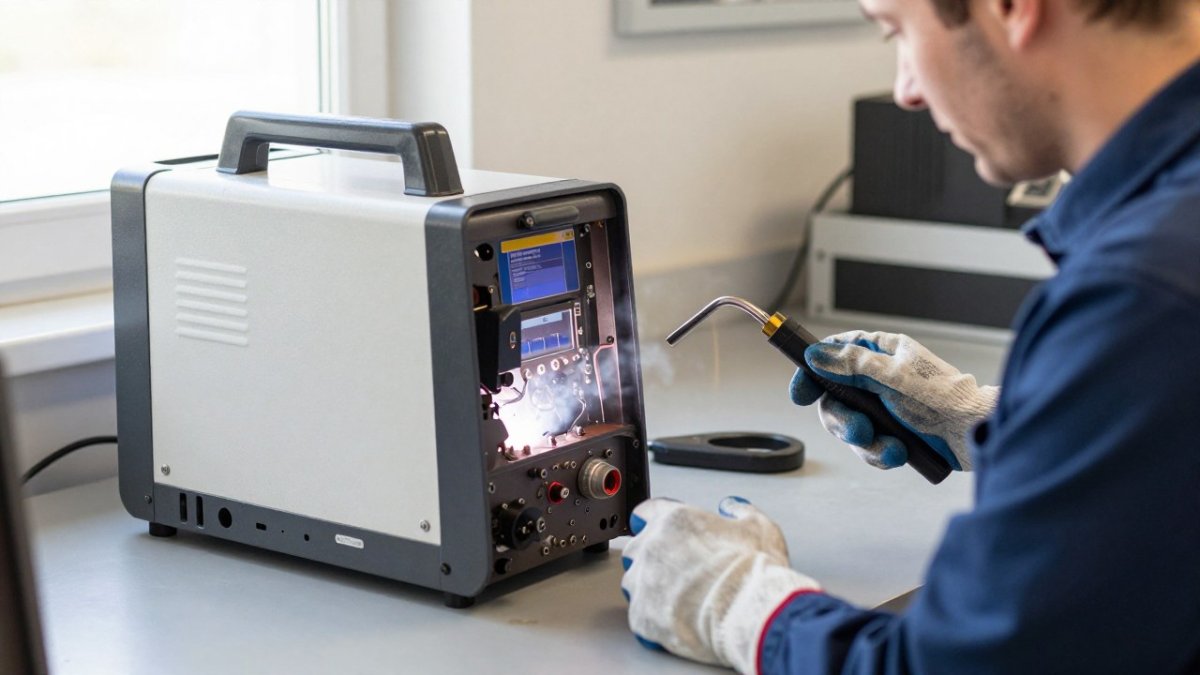
Look for these practical markers when comparing kit:
- Stated duty cycle at your intended amperage, not just peak output
- Cable gauge and insulation rating
- Replaceable wear parts with available spares
- Clear manufacturer warranty terms
Welding PPE: What Certification and Standards Add to the Price
Personal protective equipment is where the cost gap is most justified, and also where the detail matters most. Protective gloves, jackets, aprons and helmets sold for professional use are expected to meet recognised standards for heat, spatter and arc protection.
The standards you will see on professional welding PPE include:
- EN 388 for mechanical protection on gloves, abrasion, cut, tear and puncture resistance, shown as a four-digit performance rating (bsigroup.com).
- EN 407 for protection against thermal risks, including resistance to small splashes of molten metal and contact heat.
- EN 12477 for protective gloves for welders, which combines mechanical and thermal requirements and classifies gloves as Type A (higher dexterity) or Type B (higher heat protection).
- EN 175 for face and eye protection during welding and allied processes.
- EN 379 for auto-darkening welding filters, covering switching time, shade range and optical class.
- EN ISO 11611 for protective clothing used in welding and allied processes, and EN ISO 11612 for clothing protecting against heat and flame.
Employers have duties under UK health and safety law to provide suitable PPE and keep it maintained (Using personal protective equipment (PPE) to control risks at work: Overview). Check the product marking and the standard it cites, not just the price.
For guidance on the legal duties involved, see HSE guidance on personal protective equipment at work. The point for buyers is simple: certification is what protects you when something goes wrong, and it is the part of the price that is hardest to see but easiest to justify.
Welding Helmet Features That Justify a Higher Price
Our Welding Helmets & Masks range covers auto-darkening, flip-front and PPE-rated options, so you can compare features directly rather than guessing from the box.
Professional vs Budget Welding Equipment: Total Cost of Ownership
The sticker price is only the first number. Total cost of ownership is the purchase price plus everything you spend to keep the kit working over a defined period, consumables, energy, maintenance, repairs, replacement and the cost of the hours the kit is not available.
A useful way to frame it is to pick a horizon that matches your work. For a full-time fabricator, three years is a reasonable planning window; for a site welder working seasonally, one year may be enough. Over that window, the main cost lines to compare are:
- Consumables per hour of arc time. Replacement frequency and rework depend on the consumables used and how they are specified.
A simple comparison of the cost lines looks like this:
| Cost line | Budget kit | Professional kit |
|---|---|---|
| Upfront purchase | Lower | Higher |
| Consumables per hour | Higher replacement rate | Lower replacement rate |
| Energy per hour | Higher draw under load | More efficient under sustained load |
| Maintenance | Often sealed, limited service | Published spares, serviceable modules |
| Repair and parts | Limited availability | Established supply chain |
| Downtime risk | Higher | Lower |
| Expected service life under daily use | Shorter | Longer |
| Best for | Occasional, light use | Daily commercial work |
Pricing depends on quantity, specification and delivery, so check current prices on our website or request a quote. The sensible test is to estimate your hours of arc time per year, your consumable spend per hour, and the daily cost of being unable to weld.
Welding Consumable Costs and Where Savings Are Real
Consumables such as electrodes, wire and gas are an ongoing cost that many buyers underestimate.
If you want to compare consumables for small fabrication work, our guide to choosing electrodes for small workshops covers the trade-offs in more detail: best welding electrodes for small fabrication shops.
When Premium Gear Is Not Worth the Extra Cost
Premium kit is not always the answer. If you weld occasionally for home repairs, a mid-range machine and basic certified PPE will usually serve you well. Paying for high-duty-cycle industrial kit you rarely use is poor value.
Choosing Your Next Piece of Welding Kit
Start by writing down how many hours a week you weld, what processes you use and what materials you work with. Then compare kit against that duty profile rather than against the lowest price on the page. Check certification markings on PPE, the stated duty cycle on machines, and what warranty and spare parts are available.
If you are unsure which level of kit fits your work, you can get in touch with us for help. Browse our full range of welding equipment and safety gear at Norsemen Safety, or request a quote for your specific requirements.
Frequently Asked Questions
Is expensive welding equipment better than budget equipment?
Often, for professional use. Higher-priced machines and gear usually use better components, more consistent duty cycles and tighter build tolerances, which matter when a machine runs eight hours a day. Budget kit can be perfectly adequate for occasional hobby work or light repairs. The useful question is how many hours a week the equipment will run and what happens to your schedule if it fails. Ask for specifications such as duty cycle, warranty terms and parts availability, then compare those with the expected workload rather than the sticker price alone.
What makes professional welding PPE different?
Professional welding PPE is generally tested and marked to the relevant British and European standards for the specific hazard, such as eye and face protection, flame-resistant clothing and respiratory protection. Where you can, check for the marking on the product and the supplier’s declaration of conformity. Certification adds testing and documentation costs, which is part of why compliant PPE costs more. Your site’s risk assessment under HSE guidance should determine which items you need, so match the spec to the task rather than buying the most expensive option.
Does more expensive welding gear last longer?
It can, but only where the extra money goes into the parts that wear. Better cable insulation, sturdier wire feeds and robust switches tend to extend service life, and better-made helmets keep their lenses and harnesses in shape for longer. Lifespan also depends on how the gear is used and maintained. Ask suppliers about warranty length, serviceability and whether spare parts are stocked in the UK, because these affect the real lifespan of the equipment far more than the headline price.
How can you reduce welding consumable costs without compromising safety?
Start by tracking how much wire, gas and electrode you use per job, since many shops are surprised by the true figure. Buy consumables in quantities that match your workload, keep to the specification the job calls for, and avoid cheap alternatives that produce spatter, poor weld quality or rework. Savings are real when they come from reducing waste and rework, not from switching to unverified products. Pricing depends on quantity, delivery and account terms, so check current prices on the Norsemen Safety website for your specific volumes.