
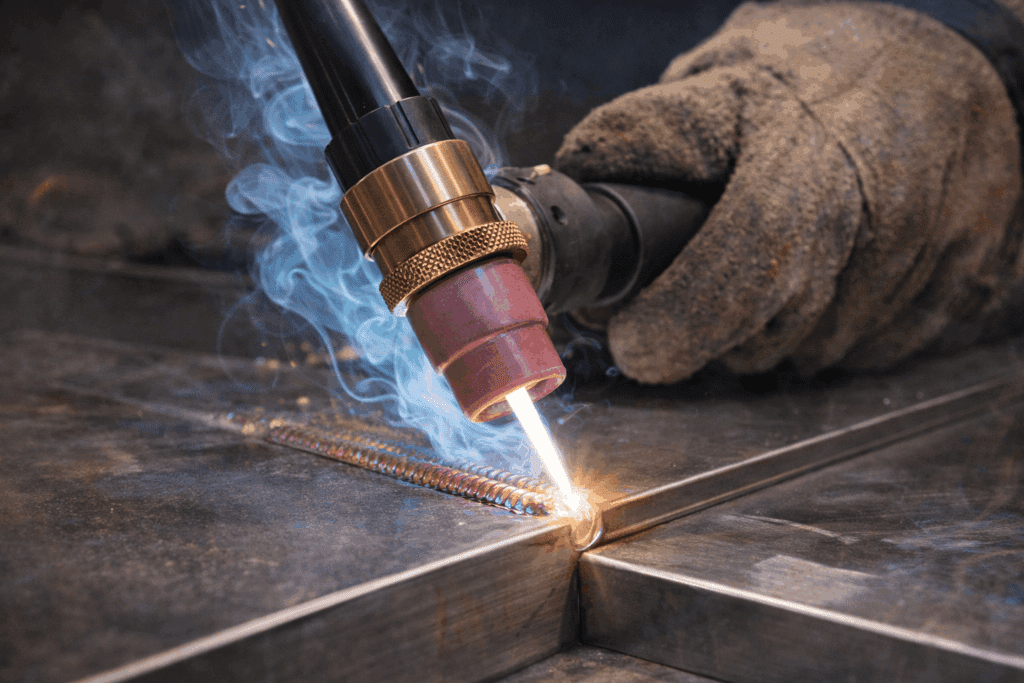
Stainless steel welders and fabricators are constantly seeking tools and techniques that deliver higher quality, precision, and efficiency. Among these advancements, gas lens TIG welding stands out as a true game changer—especially when working with stainless steel. Let’s explore what gas lens TIG welding is, why it’s so effective with stainless materials, and how it’s transforming the way welders approach critical fabrication projects.
What Is Gas Lens TIG Welding?
Gas lens TIG welding is a specialized TIG (Tungsten Inert Gas) welding setup that improves shielding gas coverage by using a gas lens assembly inside the torch. Unlike a traditional TIG torch where gas flows turbulently out of a single nozzle, a gas lens creates a smooth, laminar gas stream thanks to a series of fine mesh screens and a diffuser. This creates a broader and more consistent shield for the weld zone.
With this enhanced shielding system, welders experience better protection of the molten metal and tungsten electrode—leading to higher‑quality welds and fewer defects.
Why Stainless Steel Requires Precision Welding
Stainless steel is prized for its corrosion resistance and strength, but it’s also very sensitive to contamination during welding. If shielding gas coverage is inconsistent, oxygen and other atmospheric gases can react with the hot metal, resulting in oxidation, discoloration, or even reduced corrosion performance.
For these reasons, achieving a stable weld puddle with maximum protection from surrounding air is essential. This is where gas lens TIG welding makes a dramatic difference.
How Gas Lens TIG Improves Shielding Gas Coverage
Traditional TIG welding nozzles direct shielding gas in a cone shape that often becomes turbulent before reaching the weld surface. This turbulence can create inconsistent coverage and pockets where air contaminates the weld.
In contrast, a gas lens straightens and stabilizes the gas flow. The laminar delivery means the shielding gas reaches the weld pool more evenly and thoroughly. For stainless steel, this means:
- Reduced oxidation and discoloration
- Minimized risk of contamination
- Stronger, more aesthetically clean welds
Better shielding also makes it easier to weld thinner gauge stainless without burn‑through.
Benefits of Gas Lens TIG for Stainless Steel Fabrication
Gas lens TIG welding offers a range of advantages that make it particularly effective for stainless steel:
Cleaner, Smoother Welds
Thanks to the enhanced gas coverage, stainless welds come out with less oxidation and far less need for post‑weld cleaning or pickling. This is especially valuable in sanitary or food‑grade applications where surface finish matters.
Enhanced Arc Stability and Control
Gas lens setups tend to produce a very steady arc that’s easier to control—perfect for tight joints and precise weld paths.
Greater Visibility of the Weld Pool
With a more consistent gas shield, welders enjoy clearer visibility into the weld puddle. This makes it easier to guide the weld bead and achieve higher accuracy.
Reduced Gas Usage Over Time
Because the shielding gas is used more efficiently, many welders find they can lower gas flow rates without sacrificing coverage. Over time, this can lead to noticeable cost savings.
Gas Lens TIG vs Traditional TIG – Side by Side
| Feature | Traditional TIG | Gas Lens TIG |
|---|---|---|
| Shielding Coverage | Narrow, turbulent | Wide, laminar |
| Weld Cleanliness | Moderate | Exceptional |
| Control | Standard | Better arc focus |
| Efficiency | Higher gas use | Lower gas use |
| Stainless Steel Performance | Good | Excellent |
As you can see, gas lens TIG consistently outperforms standard configurations in key areas that matter most with stainless steel welding.
When to Use Gas Lens TIG Welding
Gas lens TIG welding is ideal for:
- Aerospace and aviation fabrications
- Food processing equipment
- Medical devices and implants
- Thin stainless steel sheets and components
- Projects requiring high cosmetic quality
Whether you’re tackling complex joints or thin‑gauge stainless, gas lens TIG gives you the edge in consistency and control.
Things to Consider Before Switching to Gas Lens TIG
While the benefits are clear, there are a few practical considerations:
- Compatibility: Make sure your existing TIG torch model supports a gas lens kit.
- Initial Cost: Gas lens components cost more upfront than standard collets and nozzles, but the long‑term quality gains often justify this.
- Maintenance: Clean gas lens screens regularly, as buildup can disrupt gas flow.
- Learning Curve: Welders may need a short adjustment period to maximize control with the new gas flow behavior.
Products that we Provide
At Norsemen safety & Welders Choice we supply a wide range of product that allow for this method of TIG welding stainless. Our most reputable brand for this is Furick. This well regarded company specialises in high-quality welding and fabrication, based in North Carolina they have built a reputation for delivering durable and reliable products tailored to your every need.
- Our best seller is the Starter Kit for 17/18/26 Torches:

Discover the best TIG torch starter kit with the Furick Starter Kit 17/18/26 Torch (FU17-SK). Perfect for professionals and hobbyists, this comprehensive TIG welding kit includes everything you need for precise and efficient welding.
Upgrade your TIG welding equipment with the Furick Starter Kit for 17/18/26 Torches (FU17-SK). This all-in-one kit is tailored for both professional welders and enthusiasts, offering top-quality components for exceptional welding performance. Known for their innovation and reliability, Furick products ensure you have the best tools for your welding projects.
- We also have a Furick all glass Kit for 17/18/26 torches:

The Furick All Glass Kit FAGKK17 is the ultimate, all-in-one consumables and accessory package for WP 17, 18 and 26 TIG torch users — delivering complete coverage from gas lens to glass cup, tungsten electrodes, diffusers and installation tools in a single kit. Designed for maximum flexibility and convenience, the kit covers a full range of torch consumables and accessories for 3/32″ (2.4 mm) tungsten wire applications.
Conclusion: The Future of Stainless Steel Welding Starts Here
Gas lens TIG welding isn’t just a small improvement—it’s a substantial upgrade to how stainless steel is welded. By offering cleaner welds, better shielding, and greater control, gas lens TIG helps welders push quality, efficiency, and craftsmanship to new levels.
If you’re serious about making your stainless steel fabrication stronger, cleaner, and more reliable, adopting gas lens TIG welding could be one of the best decisions you make.
FAQs About Gas Lens TIG Welding
Q: What is the purpose of a gas lens in TIG welding?
A: A gas lens smooths the shielding gas flow, resulting in broader and more consistent coverage of the weld puddle.
Q: Can I retrofit a gas lens to my existing TIG torch?
A: In many cases, yes. Most popular torch models offer compatible gas lens kits.
Q: Is gas lens TIG welding better for beginners?
A: Yes, because the more stable gas coverage and arc control make it easier to achieve quality welds.
Q: Why is shielding gas coverage so important in stainless steel welding?
A: Stainless steel reacts easily with oxygen and nitrogen if not properly shielded, leading to contamination and weakened corrosion resistance.
Q: Does a gas lens reduce weld contamination?
A: Absolutely. Improved shielding gas flow means fewer opportunities for atmospheric gases to affect the weld zone.