
What is MIG Brazing? MIG brazing has become one of the most important joining processes in modern automotive manufacturing. As vehicles increasingly use thinner steels, coated metals, and complex assemblies, traditional welding methods can sometimes create excessive heat and damage protective coatings.
This is where MIG brazing offers a major advantage.
By using a copper-based filler wire such as CuSi3 wire, MIG brazing allows manufacturers to join metal components while applying significantly less heat than conventional welding. The result is a cleaner, stronger joint with reduced distortion and improved corrosion resistance.
In this guide, we’ll explain exactly what MIG brazing is, how it works, why car manufacturers rely on it, and what makes MIG brazing wire such an essential material in modern fabrication.
What is MIG Brazing?
MIG brazing is a metal joining process that uses a MIG welding machine but operates more like brazing than welding.
Instead of melting the base metal, MIG brazing melts a filler material—typically CuSi3 wire—which flows across the surface of the metals being joined. The molten filler bonds the materials together without fully melting the parent metals.
This key difference allows MIG brazing to operate at much lower temperatures than traditional MIG welding.
Typical temperatures:
- MIG welding: approximately 1500°C
- MIG brazing: approximately 900–1000°C
Because the base metal does not fully melt, the process reduces distortion and preserves protective coatings on the material.
This is particularly important when working with galvanised steel, which is widely used in automotive manufacturing.
According to the Health and Safety Executive (HSE), welding processes involving coated metals require careful heat management to reduce fumes and maintain material integrity.
How MIG Brazing Works
Although MIG brazing uses a standard MIG welding machine, the process operates differently from traditional arc welding.
Instead of creating deep penetration into the base metal, the molten filler material flows across the joint through capillary action.
The key components of the process include:
- Power source – A standard MIG welder is typically used, often with specialised settings for brazing.
- Shielding gas – Argon or argon-based gas mixtures protect the molten filler material from oxidation.
- Filler wire – Copper-based filler wires such as CuSi3 wire are the most common materials used.
- Lower heat input – Reduced heat ensures the base metals remain intact while the filler bonds the joint.
Because the process produces a smooth, flowing bead, MIG brazing is particularly useful for thin sheet metal.
Whenever you are welding anything there a specific precautions that should be taken to ensure that you are safe within the working environment, for more information on this see the HSE guidelines for welding fumes in the workplace here.
What is CuSi3 Wire?
CuSi3 wire is a copper-silicon alloy filler wire designed specifically for MIG brazing.
The wire typically contains:
- Approximately 97% copper
- Around 3% silicon
This composition provides excellent flow characteristics and strong bonding properties when used for brazing steel components.
CuSi3 wire is widely used in the automotive industry because it creates joints that are:
- Corrosion resistant
- Flexible under stress
- Less prone to cracking
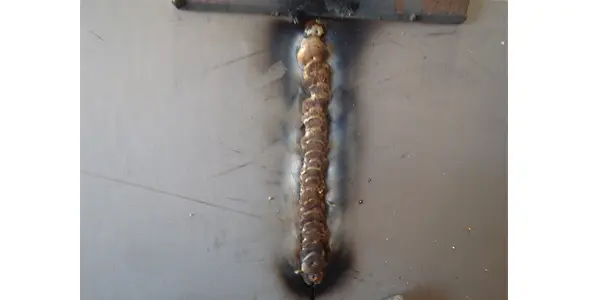
The copper-based composition also produces a distinctive bronze-coloured weld bead that is easy to identify.
Why Car Manufacturers Use MIG Brazing
Modern vehicles use complex materials designed to maximise safety while reducing weight. MIG brazing allows manufacturers to join these materials without damaging protective coatings or structural integrity.
Several key advantages explain why automotive manufacturers rely on this process.
Protecting Galvanised Steel
Many vehicle panels are made from galvanised steel to prevent corrosion.
Traditional welding burns away the zinc coating, leaving the joint vulnerable to rust.
MIG brazing solves this problem because the lower heat input preserves most of the protective coating.
This greatly improves long-term corrosion resistance.
Reduced Heat Distortion
Car panels are often made from thin sheet metal. Traditional welding can easily warp these materials.
Because MIG brazing operates at lower temperatures, it produces significantly less distortion.
This allows manufacturers to maintain tight tolerances and consistent panel alignment.
Strong Yet Flexible Joints
The copper-silicon filler metal used in MIG brazing produces joints that are slightly more flexible than standard welds.
This flexibility helps absorb vibration and stress in vehicle structures.
As a result, the joints are less likely to crack over time.
Improved Appearance
MIG brazed joints are smoother and cleaner than many traditional welds.
This reduces the need for grinding and finishing during manufacturing.
For automotive production lines, this improves efficiency and reduces production costs.
MIG Brazing vs MIG Welding
Although the two processes use similar equipment, their behaviour and results are quite different.
Here is a simple comparison.
| Feature | MIG Brazing | MIG Welding |
|---|---|---|
| Heat input | Lower | Higher |
| Base metal melting | No | Yes |
| Distortion | Low | Higher |
| Corrosion resistance | Better for galvanised steel | Zinc coating destroyed |
| Filler wire | CuSi3 wire | Steel welding wire |
Because of these differences, MIG brazing is often the preferred method for automotive bodywork.
Common Applications for MIG Brazing
While automotive manufacturing is the most well-known application, MIG brazing is used in many other industries.
Common uses include:
- Automotive body repair – Joining coated steel panels.
- HVAC manufacturing – Producing sheet metal assemblies.
- Furniture fabrication – Joining thin steel components.
- Appliance manufacturing – Producing clean joints with minimal distortion.
- Architectural metalwork – Creating aesthetically pleasing joints.
In many of these applications, MIG brazing wire provides the ideal balance between strength and appearance.
Choosing the Right MIG Brazing Wire
When selecting filler material for MIG brazing, the most common choice is CuSi3 wire.
This wire provides several advantages:
- Excellent wetting properties – The molten metal spreads easily across the joint.
- Low heat requirement – Helps preserve coatings on galvanised steel.
- Corrosion resistance – Copper-based alloys resist environmental damage.
- Smooth weld appearance – Creates clean bronze-coloured joints.
Quality filler wire is essential for achieving consistent brazed joints.
You can browse professional welding consumables here.
Tips for Successful MIG Brazing
Like any welding process, MIG brazing requires proper technique to achieve the best results.
Key tips include:
- Use the correct wire – Always select CuSi3 wire or another copper-based filler designed for brazing.
- Reduce voltage settings – Lower heat helps prevent melting the base metal.
- Maintain proper torch angle – A push technique helps control the flow of the molten filler.
- Clean the metal surface – Contaminants can prevent proper bonding.
- Practice on scrap material – MIG brazing requires slightly different technique compared to standard MIG welding.
The Future of MIG Brazing
As vehicle design continues to evolve, MIG brazing is expected to play an even larger role in manufacturing.
New vehicle structures increasingly combine:
- Advanced high-strength steel
- Galvanised components
- Lightweight body panels
These materials require joining techniques that minimise heat distortion and preserve coatings.
Because MIG brazing meets these requirements, it remains a critical technology for automotive production.
Many modern robotic welding systems now use MIG brazing for assembling vehicle structures.
FAQ: MIG Brazing
What is MIG brazing used for?
MIG brazing is primarily used for joining thin sheet metal and galvanised steel. It is especially common in automotive manufacturing and body repair.
What is CuSi3 wire?
CuSi3 wire is a copper-silicon alloy filler material used in MIG brazing. It melts at lower temperatures and allows metals to bond without melting the base metal.
Is MIG brazing stronger than welding?
MIG brazed joints are usually slightly weaker than full welds but are more flexible and resistant to cracking. For thin sheet metal and coated steels, this makes MIG brazing a better choice.
Can a normal MIG welder perform MIG brazing?
Yes. Most standard MIG welding machines can perform MIG brazing by using the correct filler wire and adjusting voltage and heat settings.
Why is MIG brazing used in car manufacturing?
Car manufacturers use MIG brazing because it produces less heat distortion, preserves galvanised coatings, and creates clean, corrosion-resistant joints.
Final Thoughts
MIG brazing is a specialised joining process that has become essential in modern automotive manufacturing. By using copper-based filler materials such as CuSi3 wire, manufacturers can produce strong, clean joints while minimising heat distortion and preserving corrosion-resistant coatings.
As vehicles continue to use thinner and more advanced materials, MIG brazing wire will remain a crucial part of automotive production and metal fabrication.
Understanding how this process works—and when to use it—can help welders, engineers, and manufacturers produce stronger, more reliable metal assemblies.