
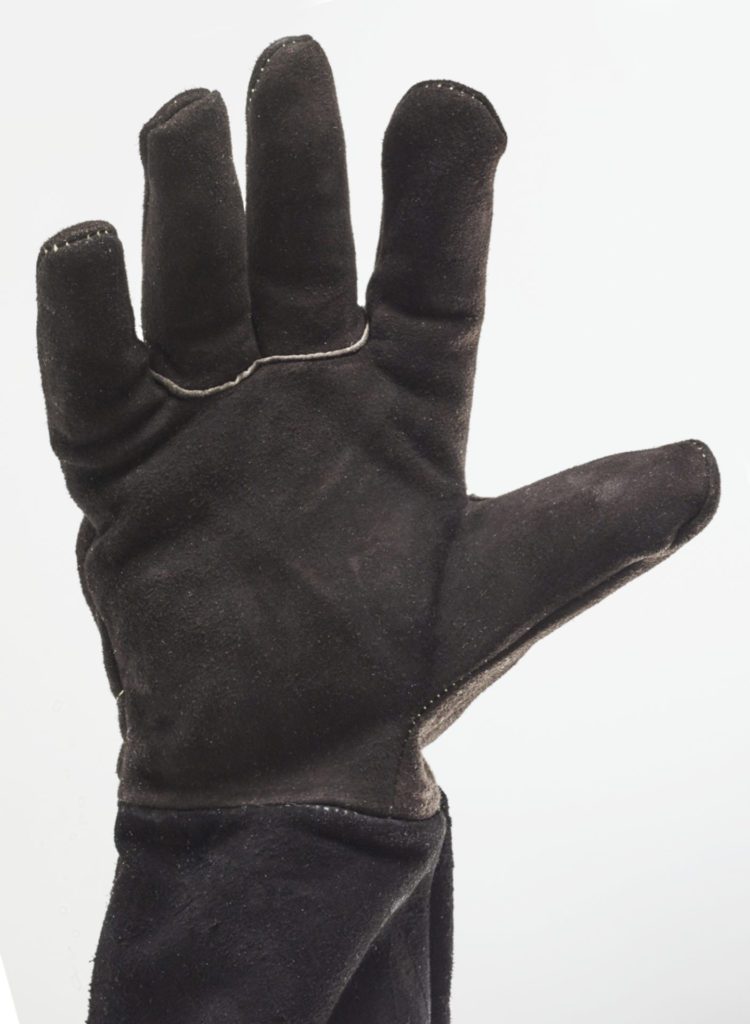
Welding Gloves – Mig or Tig Welding Gloves
If you’re buying welding gloves, one of the first questions to consider is whether you need MIG welding gloves or TIG welding gloves. Although both are designed to protect your hands while welding, they are not designed for exactly the same job.
MIG and TIG welding produce different levels of heat, spatter and exposure, while TIG welding also requires a much higher level of hand and finger dexterity.
Choosing the right welding gloves therefore means finding the right balance between protection, comfort, durability and dexterity.
At Norsemen Safety, we supply professional welding PPE for welders, fabricators and industrial users throughout the UK and Ireland. In this guide, we’ll explain the main differences between MIG and TIG welding gloves and help you decide which type is best for your application.
MIG vs TIG Welding Gloves: The Quick Answer
The main difference is protection versus dexterity.
MIG welding gloves are generally heavier and more robust because MIG/MAG welding can produce considerable heat, sparks and molten metal spatter.
TIG welding gloves are generally thinner and more flexible because TIG welding requires greater precision and tactile sensitivity.
| Feature | MIG Welding Gloves | TIG Welding Gloves |
|---|---|---|
| Protection | Generally higher | Balanced with dexterity |
| Dexterity | Moderate | High |
| Glove thickness | Usually thicker | Usually thinner |
| Flexibility | Moderate | High |
| Spatter protection | Important | Less significant in many applications |
| Typical materials | Durable leather/construction | Soft, flexible leather |
| Best suited to | MIG/MAG & fabrication | TIG & precision welding |
There is no single “best welding glove”. The right choice depends on the welding process and the conditions in which you’re working.
What Are MIG Welding Gloves?

MIG welding gloves are designed for the conditions commonly encountered during MIG and MAG welding.
MIG welding can generate significant heat, sparks and welding spatter, particularly when working at higher amperages or during heavy fabrication.
For this reason, MIG welding gloves are generally constructed to provide a high level of protection while remaining comfortable enough for extended periods of use.
Typical features can include:
- Durable leather construction
- Heat protection
- Protection from welding spatter
- Abrasion resistance
- Reinforced areas
- Longer cuffs for additional wrist and forearm coverage
- Robust stitching and construction
MIG gloves are particularly useful for general fabrication, structural work, workshop welding and applications where durability is important.
When Should You Use MIG Welding Gloves?
MIG gloves are generally suitable for:
- MIG welding
- MAG welding
- Heavy fabrication
- Structural fabrication
- General workshop welding
- Higher-amperage welding
- Applications involving significant welding spatter
If your work involves frequent contact with hot components or considerable welding spatter, a more substantial glove may provide advantages over a lightweight TIG glove.
What Are TIG Welding Gloves?
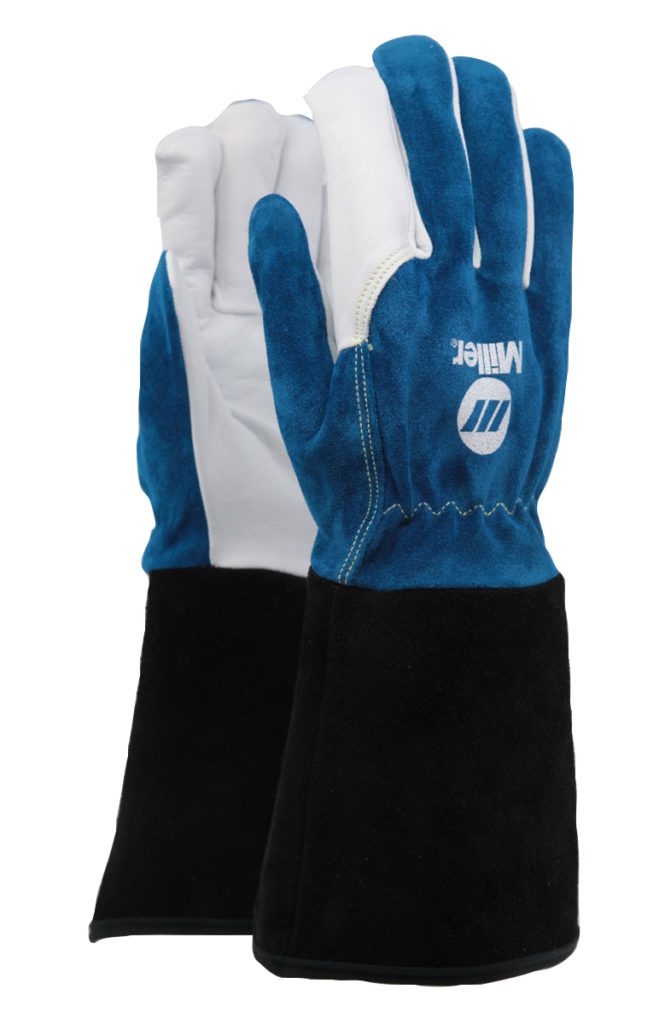
TIG welding is different.
The process gives the welder much greater control, but that control also means that the operator often needs to make precise movements with the torch and filler rod.
A thick, bulky glove can make this more difficult.
TIG welding gloves are therefore generally thinner, softer and more flexible than MIG gloves.
Their design prioritises:
- Finger dexterity
- Tactile sensitivity
- Flexibility
- Precise control
- Comfortable fit
Many TIG gloves are manufactured from soft leather, providing a good balance between protection and the ability to feel what you’re doing.
When Should You Use TIG Welding Gloves?
TIG gloves are particularly suited to:
- TIG welding
- Stainless steel welding
- Aluminium welding
- Precision fabrication
- Sheet metal work
- Applications requiring fine torch control
- Welding where filler rod needs to be manipulated accurately
For professional TIG welders, having a glove that allows natural finger movement can make a significant difference.
Why Are TIG Gloves Thinner Than MIG Gloves?
The difference comes down largely to the nature of the welding processes.
With MIG welding, the welder is typically dealing with more continuous welding spatter and a greater degree of heat exposure.
TIG welding generally produces a more controlled arc and does not produce the same level of spatter.
This allows TIG gloves to be designed with greater emphasis on dexterity and tactile sensitivity.
A thinner glove allows the welder to:
- Move their fingers more easily
- Control the TIG torch accurately
- Feed filler rod
- Adjust their grip
- Manipulate small components
- Maintain better tactile feedback
However, thinner does not mean that protection is unimportant.
TIG gloves still need to provide suitable protection for the conditions in which they are being used.
Can You Use MIG Gloves for TIG Welding?
Technically, you can use a MIG glove for TIG welding, provided the glove is appropriate for the hazards involved.
However, it may not be the best choice.
A heavy-duty MIG glove can make it harder to perform the fine movements required for TIG welding. This can affect torch control and make precise work more difficult.
For this reason, dedicated TIG welding gloves are generally preferable for precision TIG work.
If you’re switching between MIG and TIG welding regularly, having separate gloves for each process can be a sensible approach.
Can You Use TIG Gloves for MIG Welding?
This is generally less desirable.
The thinner construction of TIG gloves means they may not provide the same level of protection against the heat and welding spatter encountered during some MIG/MAG applications.
If you’re carrying out higher-amperage MIG welding, heavy fabrication or work involving substantial spatter, a more robust welding glove is generally more appropriate.
Always check the individual glove’s certification and manufacturer’s instructions to ensure it is suitable for your particular application.
What Materials Are Welding Gloves Made From?
Leather remains one of the most common materials used for professional welding gloves because it can provide a useful combination of durability, flexibility and heat protection.
Different types of leather can produce different characteristics.
Cowhide
Cowhide is commonly used for durable welding gloves and can provide good resistance to abrasion and general workshop use.
Goatskin
Goatskin is often valued for its flexibility and tactile sensitivity, making it particularly popular for applications where dexterity is important.
Pigskin
Pigskin can provide a useful combination of flexibility and durability and is used in a variety of protective glove applications.
Split Leather
Split leather is commonly used in heavier-duty welding gloves where durability and protection are important.
The material alone doesn’t determine whether a glove is suitable. Construction, thickness, stitching, lining, cuff design and certification all matter.
What Welding Glove Standards Should You Look For?
When buying welding gloves, don’t simply choose based on appearance or thickness.
Check the manufacturer’s specifications and the standards to which the glove has been tested.
EN 12477
EN 12477 is the European standard specifically covering protective gloves for welders.
It addresses requirements for gloves designed to protect against hazards associated with welding and related processes.
EN 388
EN 388 relates to protection against mechanical risks.
Depending on the glove, this can include performance against:
- Abrasion
- Cut
- Tear
- Puncture
This can be particularly relevant where welders are also handling metal components.
EN 407
EN 407 relates to protection against thermal risks.
The individual performance levels shown by the glove’s certification indicate the level of protection achieved against specific thermal hazards.
It’s important to check the actual certification of the glove rather than assuming that every welding glove provides the same level of protection.
How Should Welding Gloves Fit?
The correct fit is important for both safety and performance.
A welding glove should be:
- Secure without being excessively tight
- Long enough to provide appropriate wrist coverage
- Flexible enough for the intended task
- Free from excessive material around the fingertips
- Comfortable during prolonged use
For TIG welding, fit is particularly important because finger movement and tactile control are essential.
For heavy-duty MIG or fabrication work, cuff length and overall protection may be more important than achieving the same level of dexterity.
Avoid gloves that are excessively loose, as they can make handling tools and equipment more difficult.
How Long Do Welding Gloves Last?
There isn’t a fixed lifespan for welding gloves.
The useful life depends on:
- How frequently they’re used
- The welding process
- Heat exposure
- Contact with abrasive materials
- Exposure to welding spatter
- How they’re stored
- The quality and construction of the glove
Inspect welding gloves regularly.
Look for:
- Holes
- Burn damage
- Split seams
- Excessive thinning
- Cracked or hardened leather
- Damage to cuffs
- Contamination
- Loss of flexibility
If the glove is damaged or no longer provides the required protection, it should be replaced.
Which Welding Gloves Are Best for You?
The answer depends on what you do.
If you’re mainly MIG welding
Choose a durable welding glove with suitable protection against heat and welding spatter.
If you’re mainly TIG welding
Choose a thinner, flexible glove that provides good dexterity and tactile sensitivity.
If you do both MIG and TIG
Consider having separate MIG and TIG gloves so you can select the appropriate protection and dexterity for each process.
If you’re doing heavy fabrication
Prioritise durability, heat protection and appropriate coverage.
If you’re handling sharp metal
Consider the glove’s mechanical protection as well as its welding performance.
Don’t Choose Welding Gloves on Thickness Alone
It’s tempting to assume that a thicker glove automatically provides better protection.
That’s not necessarily the case.
A welding glove should be selected according to the specific hazards of the task.
A very thick glove may provide excellent protection but be unnecessarily restrictive for precision TIG welding.
Likewise, a lightweight glove may offer excellent dexterity but be unsuitable for heavy MIG fabrication.
The objective is to choose the right level of protection for the job, rather than simply choosing the thickest glove available.
Buy Welding Gloves from Norsemen Safety
Norsemen Safety supplies professional welding and industrial PPE to customers throughout the UK and Ireland.
Our range of welding gloves includes options for different welding processes and applications, from precision TIG welding through to MIG/MAG welding and heavy fabrication.
If you’re unsure which welding gloves are suitable for your work, our team can help you select hand protection based on the welding process, working environment and level of protection required.
Browse our range of [Welding Gloves] or contact Norsemen Safety for advice.
Frequently Asked Questions
Are MIG and TIG welding gloves the same?
No. MIG gloves are generally heavier and designed with greater emphasis on heat and spatter protection, while TIG gloves are usually thinner and more flexible to provide greater dexterity.
Are TIG gloves better than MIG gloves?
Neither is universally better. TIG gloves are better suited to precision TIG welding, while MIG gloves are generally more appropriate for MIG/MAG welding and applications involving greater heat and spatter.
Can I use TIG gloves for MIG welding?
It depends on the individual glove and application, but a lightweight TIG glove may not provide adequate protection for higher-heat or high-spatter MIG welding. Always check the manufacturer’s specifications.
What are the best gloves for MIG welding?
The best MIG welding gloves provide an appropriate balance of heat protection, durability, comfort and dexterity for the particular welding application.
What are the best gloves for TIG welding?
TIG welding generally benefits from a lightweight, flexible glove that provides good tactile sensitivity while maintaining suitable protection from heat.
What standard should welding gloves meet?
EN 12477 is the European standard specifically covering protective gloves for welders. Individual gloves may also carry standards such as EN 388 and EN 407 depending on their tested performance and intended applications.
Do welding gloves protect against heat?
Welding gloves are designed to provide protection against heat, but the level of protection varies between products. Always check the manufacturer’s specifications and certification before using gloves for a particular application.
Need Help Choosing Welding Gloves?
Choosing between MIG and TIG welding gloves doesn’t have to be complicated.
Browse Norsemen Safety’s range of welding gloves or contact our team if you need help selecting the right hand protection for your welding application.