
Table of Contents
- Why Welding Respirators Matter for Your Safety
- Types of Welding Respirators Explained
- Selecting the Best Respirator for Welding Fumes
- Understanding Welding Fume Respirator Filters
- Conducting a Welding Respirator Fit Test
- Respirator Maintenance and Filter Replacement
- Key Factors to Consider Before Purchasing
- Frequently Asked Questions
Last Updated: October 21, 2026
Why Welding Respirators Matter for Your Safety
Understanding how to choose welding respirators for safety is one of the most critical decisions you’ll make for your health and safety on site. When you’re welding, you’re exposed to metal fumes, gases, and particulates that can cause serious respiratory damage over time.
At Norsemen Safety, we understand that how to choose welding respirators for safety isn’t about grabbing the first mask you see, it’s about matching the threat to the right equipment. Without proper respiratory protection, you’re accepting a level of risk that compounds with every shift.
The solution is straightforward: know your hazard, understand the respirator types available, and ensure proper fit and maintenance. This guide walks you through every decision point so you can work with confidence that your lungs are genuinely protected.
Types of Welding Respirators Explained
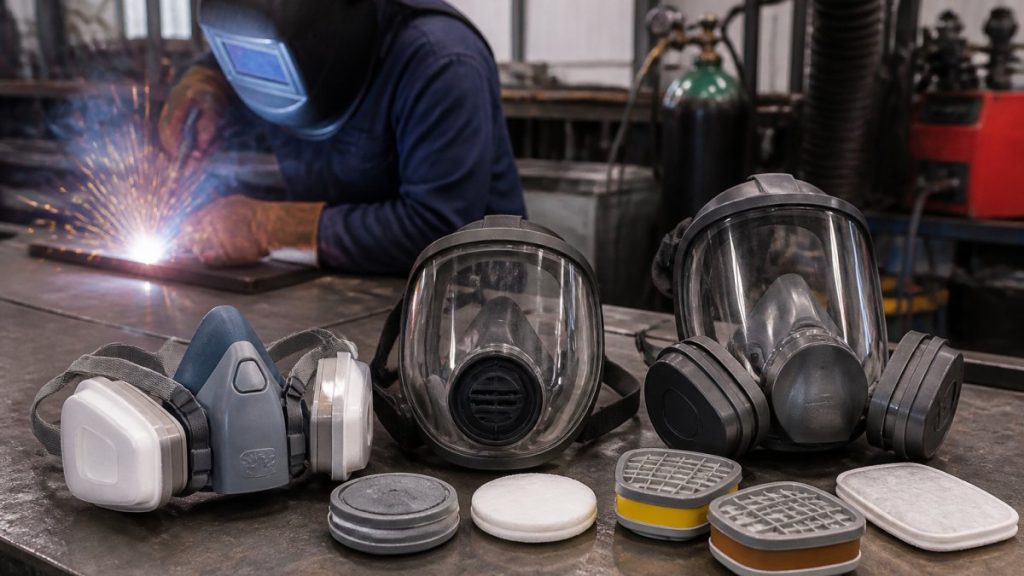
Welding respirators come in four main categories, each designed for different hazard levels and working conditions. Using the wrong type leaves gaps in your protection, even if the mask sits correctly on your face.
Half-Mask Respirators
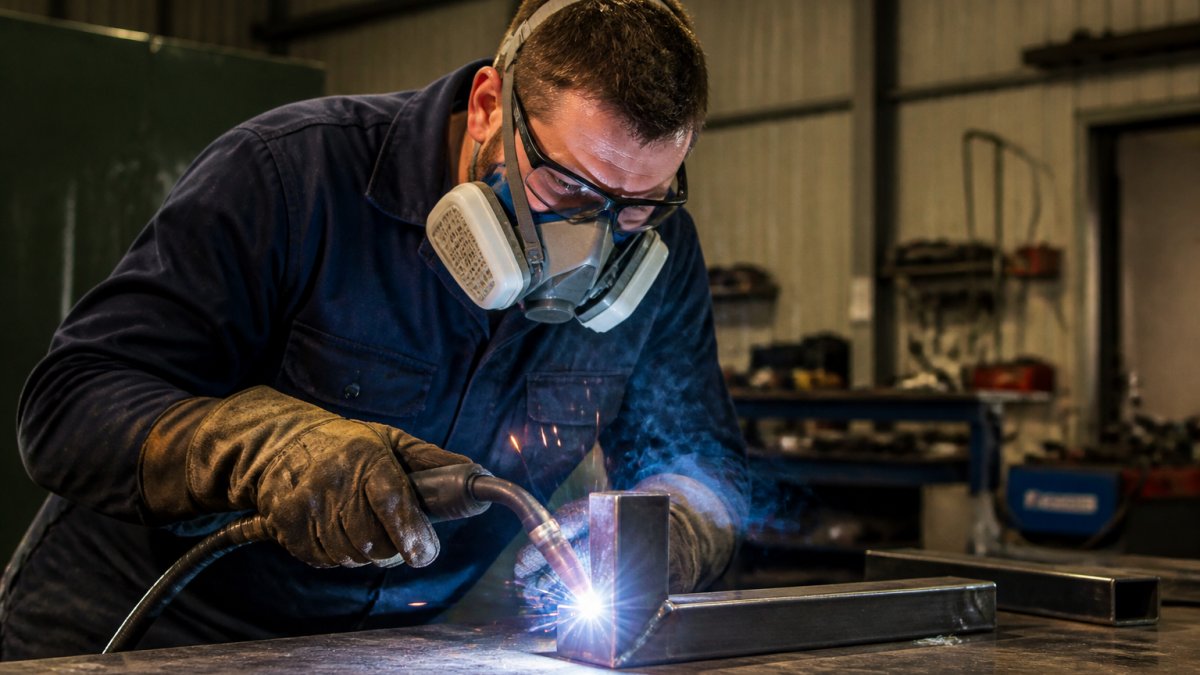
A half-mask respirator covers your nose and mouth but leaves your eyes and upper face exposed. These are lightweight, affordable, and comfortable for extended wear, which makes them popular for routine welding tasks where fume concentrations are moderate.
Half-mask respirators work by drawing contaminated air through replaceable filters that trap particulates and gases. They’re most effective for MIG and TIG welding where fume volumes are lower than with stick welding.
Many welders choose half-masks because they’re easier to put on and take off repeatedly. However, a proper seal is critical, even small gaps around the edges let unfiltered air bypass the filters entirely, defeating the purpose of wearing one.
Full-Face Respirators
Full-face respirators provide complete coverage from your chin to your forehead, protecting your entire face and eyes. They’re bulkier than half-masks and take longer to put on, but they offer superior protection for high-fume environments and provide integrated eye protection.
Full-face models are particularly valuable with heavy-fume materials or in confined spaces with poor air circulation, and they protect against facial heat and spatter, reducing the need for additional face shields.
Fit is even more critical with full-face respirators because the larger seal area creates more opportunities for leakage. Adjust the straps carefully: too loose and you lose the seal, too tight and you create painful pressure points over time.
Powered Air-Purifying Respirators (PAPR)
PAPRs use a battery-powered fan to actively pull air through filters and deliver it to your breathing zone. Unlike passive respirators, they reduce breathing resistance, making them more comfortable for extended use.
They’re ideal for high-fume environments, overhead welding, or long stretches without breaks, delivering consistent airflow regardless of how hard you’re breathing. PAPRs also tend to have larger viewing areas than passive full-face respirators.
The trade-off is cost and maintenance. PAPRs are significantly more expensive than passive respirators, require regular battery charging, and have more components that need inspection and replacement. They’re best suited for larger operations or dedicated fabrication shops where the investment pays off through regular use.
Supplied Air Respirators
Supplied air respirators connect you to an external air source via a hose, delivering clean, breathable air continuously. They’re the gold standard for the most hazardous environments: confined spaces, extremely high fume concentrations, or oxygen-deficient atmospheres.
Supplied air systems bypass filters entirely because you breathe air from an external compressor rather than filtering ambient air, making them essential where standard filtering isn’t adequate. However, they require significant infrastructure: a compressor, hose management, and regular air quality testing.
They’re typically used in industrial settings, shipbuilding, or specialised fabrication rather than smaller job sites. The cost and complexity make them impractical for most day-to-day welding, but when the hazard warrants it, they provide unmatched protection.
Selecting the Best Respirator for Welding Fumes
Choosing the best respirator for welding fumes depends on three primary factors: the type of welding process you’re using, the duration and frequency of your exposure, and the specific materials being welded.
Stick welding produces the heaviest fume load, so it typically requires either a full-face respirator or a PAPR.
Duration matters significantly. Welding 30 minutes a few times per week, a half-mask is likely sufficient; welding 6 hours daily, the comfort and reduced breathing resistance of a PAPR becomes genuinely valuable.
The materials you’re welding also influence your choice. Stainless steel produces chromium fumes requiring specific filter ratings, galvanised steel releases zinc oxide that causes metal fume fever without adequate protection, and aluminium produces different particulates than carbon steel.
Understanding Welding Fume Respirator Filters
The filters do the actual protecting, so understanding filter types and ratings is essential.
Filter Types and Ratings
Welding fume respirator filters are classified by the hazards they address: particulate filters trap solid particles like metal oxides and fumes, gas and vapour filters use activated charcoal to remove chemical gases, and combination filters do both.
For welding specifically, you’ll typically use particulate filters rated P1, P2, or P3 (in the UK and Europe, these follow EN 143 standards). P1 filters trap larger particles and are suitable for nuisance dust.
The filter rating refers to the percentage of particles the filter removes from the air. A P2 filter removes at least 94% of particles 0.3 micrometres and larger. A P3 removes at least 99.95%.
Some operations also require organic vapour filters if you’re using solvents or materials that off-gas.
When to Replace Filters
Filters degrade as they accumulate particles and become saturated. A clogged filter forces you to breathe harder, increasing the risk of leakage around the seal and reducing protection.
Replace filters when you notice increased breathing resistance, when they become visibly clogged with dust or residue, or according to the manufacturer’s recommended schedule. Some filters are disposable and designed for single-shift use. Others are reusable and can be cleaned and used multiple times before replacement.
Never assume a filter is still good just because you’ve only used it a few hours, high humidity, oils, solvents, and heat all degrade filters faster than normal use. When in doubt, replace it; a new filter costs far less than respiratory damage.
Conducting a Welding Respirator Fit Test
A fit test is a procedure that confirms your respirator creates an adequate seal on your face. Without a proper seal, unfiltered air bypasses the filters entirely, and you’re essentially not wearing protection at all.
Fit tests can be qualitative or quantitative.
For most welding operations, a qualitative fit test is sufficient and is often performed by your employer or a health and safety professional.
Fit tests should be performed when you first receive a respirator, whenever you change models or sizes, and annually as part of your respiratory protection programme.
Respirator Maintenance and Filter Replacement
Proper maintenance extends your respirator’s life and ensures it keeps protecting you. After each use, inspect the mask for damage, cracks, or deterioration, and check the straps for wear.
Clean your respirator regularly with mild soap and water, then allow it to air dry completely before storing it. Never use harsh solvents or bleach, which can damage the mask material.
Replace filters immediately after use if they’re disposable, or clean and store reusable filters according to the manufacturer’s instructions.
Inspect the exhalation valve regularly to ensure it’s sealing properly. A faulty exhalation valve allows your exhaled breath to escape around the sides of the mask rather than through the valve, creating an incomplete seal.
| Maintenance Task | Frequency | Purpose |
|---|---|---|
| Visual inspection | After each use | Catch damage before it affects protection |
| Cleaning | Weekly or as needed | Remove dust and residue |
| Filter replacement | When clogged or per schedule | Maintain airflow and filtration |
| Exhalation valve check | Monthly | Ensure proper seal and function |
| Fit test | Annually | Confirm adequate seal |
| Full replacement | Every 3-5 years | Address material degradation |
Key Factors to Consider Before Purchasing
Budget matters, but it shouldn’t drive the decision. A cheap respirator that’s uncomfortable or fits poorly won’t be worn consistently, negating any savings.
Comfort directly affects compliance: if your team finds a respirator unbearable, they’ll remove it whenever they think they can get away with it, despite understanding the risks.
Ensure any respirator you purchase meets the relevant safety standards.
Consider your workforce’s diversity: faces come in different shapes and sizes, and not every respirator fits every person equally well.
Think about the support you’ll receive after purchase. Will the supplier provide guidance on fit testing, maintenance, and filter selection?
Frequently Asked Questions
What type of respirator is best for welding?
The best respirator for welding depends on your work environment and fume exposure. Half-mask respirators with P3 filters suit general welding tasks and are affordable. Full-face respirators offer eye protection alongside respiratory protection. For high-fume environments or extended shifts, powered air-purifying respirators (PAPR) reduce breathing resistance. Supplied air respirators provide the highest protection for extreme conditions. Consult HSE guidance and your workplace risk assessment to determine which type suits your needs.
Do welders need a respirator?
Yes. Welding produces hazardous fumes containing metal oxides, fluorides, and other particulates that can damage lungs and cause long-term health problems. The Health and Safety Executive (HSE) requires employers to control welding fume exposure through engineering controls first, then PPE including respirators where necessary. Even if local ventilation is present, a respirator provides additional protection. Your employer must conduct a risk assessment to determine whether respirators are required for your role.
How do I know if my welding respirator fits properly?
A proper fit is essential for protection. Conduct a fit test before first use and annually thereafter. During a fit test, a trained person applies a test substance (qualitative or quantitative) to detect leaks around the seal. You’ll also perform a user seal check before each shift: cover the inlet and inhale to create negative pressure, or cover the outlet and exhale to create positive pressure. If air leaks in or out, adjust the straps or try a different size. Never rely on a respirator that doesn’t seal properly.
What respirator filter should I use for welding fumes?
Use P3 particulate filters for most welding applications. P3 filters capture 99.97% of particles down to 0.3 microns, including metal oxides and fumes. If you’re exposed to gases (not just particulates), use combination filters with both particulate and gas cartridges. Check your workplace risk assessment and the Safety Data Sheets (SDS) for the specific fumes you’ll encounter. Replace filters when breathing becomes difficult or after the manufacturer’s recommended service life, whichever comes first.
Can I use a disposable respirator for welding?
Disposable respirators offer limited protection for welding. They lack the seal efficiency and durability of reusable half-mask or full-face respirators, and they cannot accommodate the variety of filters needed for different fume types. Disposable masks are suitable only for very light, occasional welding tasks with minimal fume exposure. For regular welding work, invest in a reusable respirator with replaceable filters. Over time, reusable respirators are more cost-effective and provide superior protection.
How often should I replace my welding respirator filters?
Replace filters based on two criteria: breathing resistance and service life. If breathing becomes noticeably harder, replace the filter immediately, this signals saturation. Most manufacturers recommend replacing P3 filters every 40 hours of use or after one month of storage, whichever comes first. Combination filters with gas cartridges may need replacement sooner depending on exposure levels. Keep a maintenance log of filter use and replacement dates. Store filters in a sealed container away from moisture and contaminants.
Can a welding respirator be worn under a welding helmet?
Yes, but compatibility matters. Half-mask respirators fit under most welding helmets without interfering with the helmet’s seal or visibility. Full-face respirators may not fit under all helmet designs. Before combining equipment, test the fit of your specific respirator and helmet together to ensure neither shifts during use and both maintain proper seals. Ensure straps don’t overlap in ways that compromise either seal. If your helmet and respirator don’t work together comfortably, consider a powered air-purifying respirator (PAPR) with a helmet-mounted unit instead.
When should I use a powered air-purifying respirator for welding?
Use a PAPR when welding in high-fume environments, during extended shifts, or when breathing resistance from passive filters becomes uncomfortable. PAPRs use a battery-powered blower to pull air through filters, reducing breathing effort. They’re ideal for workers who experience fatigue or headaches from passive respirators, or for operations with very high fume concentrations. PAPRs cost more initially but improve comfort and compliance, encouraging workers to wear them consistently. Ensure the blower battery is charged and filters are clean before each use.