
Table of Contents
- Why Respiratory Protection Matters for Welders
- Types of Respiratory Protection for Welding
- Welding Respirator Filters: What You Need to Know
- Air-Fed Welding Helmets: Integrated Protection
- Welding Helmet with Respirator Integration
- Selecting the Right Fit and Size
- Maintenance and Replacement Schedules
- HSE Compliance and Standards
- Frequently Asked Questions
Last Updated: 12 October 2026
Why Respiratory Protection Matters for Welders
Respiratory protection for welding isn’t optional, it’s essential. Welding fumes contain hazardous metals, fluorides, and oxides that damage your lungs over time (Health risks from welding). Without proper respiratory protection for welding, you’re inhaling particles that accumulate in your respiratory system, leading to chronic conditions that can end your career.
The Health and Safety Executive (HSE) mandates respiratory protection in welding environments where exposure exceeds safe limits. This isn’t bureaucracy. It’s based on decades of occupational health data showing that unprotected welders face significantly higher rates of respiratory disease.
At Norsemen Safety, we understand the stakes. The cost of a quality respirator is trivial compared to the cost of occupational lung disease.
When you buy respiratory protection for welding, your choice determines not just your safety, but your ability to work pain-free for decades. This guide covers what actually works.
Types of Respiratory Protection for Welding
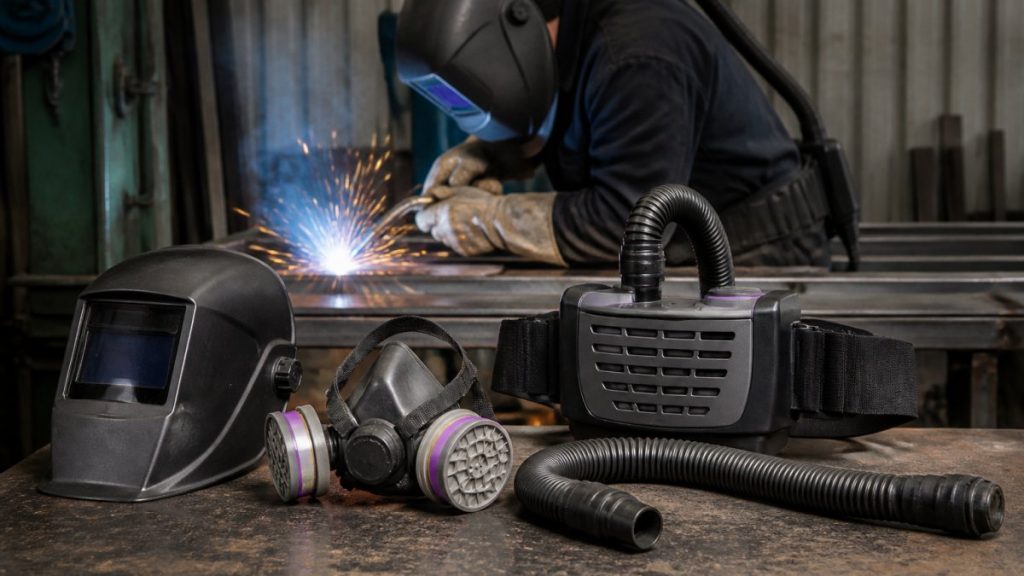
Respiratory protection comes in several forms, each suited to different welding processes and exposure levels. Understanding the differences helps you select the right tool for your specific work.
Powered Air-Purifying Respirators (PAPRs)
A powered air-purifying respirator (PAPR) uses a battery-powered motor to pull air through filters and deliver it to your breathing zone. This approach offers comfort and efficiency for extended welding sessions.
PAPRs work well for high-fume environments because they maintain positive pressure around your face. You breathe filtered air continuously without the resistance of manual inhalation. Many welders prefer PAPRs for overhead work, where comfort during extended exposure matters most.
The trade-off is cost and maintenance. PAPRs require battery charging, filter replacement, and regular servicing. For small operations or occasional welding, the investment may not justify itself. For production welding or high-volume fabrication, PAPRs often pay for themselves through reduced fatigue and faster work cycles.
Half-Mask Respirators for Welding
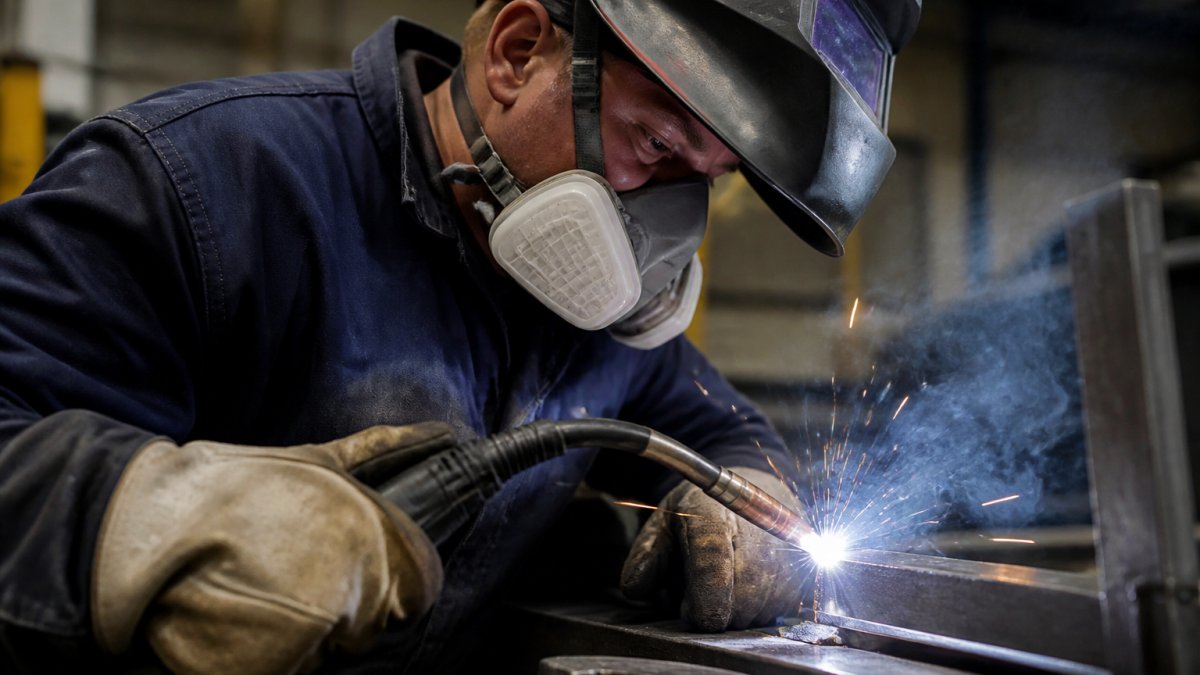
A half-mask respirator for welding covers your nose and mouth, leaving your eyes exposed. It’s the most common choice for general welding work because it balances protection, cost, and practicality.
Half-mask respirators for welding work by filtering incoming air through replaceable cartridges. They’re lightweight, affordable, and compatible with most welding helmets. You fit the mask to your face, secure the straps, and breathe filtered air.
The key limitation is fit. A half-mask respirator for welding only works if it seals properly against your skin. Facial hair, scars, or incorrect sizing reduces effectiveness dramatically. This is why fit testing is mandatory under HSE regulations, a poorly fitted respirator provides false confidence and no actual protection.
Full-Face Respirators
A full-face respirator covers your entire face, protecting eyes and respiratory system simultaneously. It’s the premium option for maximum protection and visibility during complex welding tasks.
Full-face models offer several advantages: they protect against eye irritation from fumes, they’re easier to fit correctly for people with facial hair, and they provide better visibility through larger lens areas. For TIG welding or precision work where you need clear sightlines, a full-face respirator eliminates the need to remove your helmet repeatedly.
The drawback is heat. Welding already generates significant heat, and a full-face respirator traps more of it around your head. In hot environments or during long shifts, this becomes uncomfortable and can affect concentration.
Welding Respirator Filters: What You Need to Know
The filter is where respiratory protection actually happens. Understanding filter types and replacement schedules is critical because a clogged or expired filter defeats the entire purpose of wearing a respirator.
Welding respirator filters come in several types, each designed for specific contaminants. Particulate filters capture solid particles like metal oxides and dust. Combination cartridges add chemical absorption to handle gases and vapours alongside particles. For welding, you typically need combination cartridges because welding fumes contain both particulates and chemical compounds.
Filter life depends on your welding environment and workload. A busy fabrication shop might replace filters weekly, whilst occasional welders might go months. The HSE guidance is clear: replace filters when you notice increased breathing resistance or if they become visibly clogged with residue. Never re-use a filter or attempt to clean and reuse cartridges, they’re disposable for a reason.
Many welders make the mistake of keeping filters installed longer than necessary to save money. This creates a false economy. A clogged filter forces you to work harder to breathe, reducing productivity and increasing fatigue. Fresh filters cost pennies compared to lost work time.
Air-Fed Welding Helmets: Integrated Protection
An air-fed welding helmet combines respiratory protection with your welding helmet in a single unit. Instead of wearing a separate respirator under your helmet, the helmet itself supplies filtered air to your breathing zone.
Air-fed welding helmets connect to a remote air supply, either a compressor or a portable battery-powered unit. Clean, filtered air flows continuously into the helmet, creating a positive-pressure environment that keeps fumes away from your face. This design eliminates the seal-fit problems of traditional respirators because the helmet covers your entire head.
The practical advantage is comfort. You’re not fighting to breathe against filter resistance, and the continuous airflow keeps you cooler during extended work. For production welding or outdoor work in warm conditions, air-fed systems often outperform traditional respirators.
The main consideration is portability. You need access to an air supply, which limits mobility on site. For stationary work at a bench or in a dedicated welding area, this isn’t a problem. For site work or maintenance welding in remote locations, portability becomes a constraint.
Welding Helmet with Respirator Integration
Some modern welding helmets now incorporate welding helmet with respirator features directly into their design. These hybrid units feature built-in cartridge slots or connection points for respiratory filters, turning your helmet into a complete respiratory protection system.
This integration offers convenience. You put on one piece of equipment instead of juggling a separate respirator and helmet. The design is particularly useful for workers who move between different tasks because you’re not removing and refitting multiple items.
The trade-off is specificity. An integrated system works well for general welding but may not be ideal if you need to switch between different types of respiratory protection depending on your task. A dedicated PAPR or half-mask respirator for welding offers more flexibility if your work varies significantly.
Selecting the Right Fit and Size
Fit is non-negotiable. The HSE requires fit testing for all respiratory protection because an ill-fitting respirator provides zero protection, regardless of how advanced the filters are.
Start by understanding face shape categories. Respirators come in multiple sizes, small, medium, large, and different brands fit differently. Your face shape, chin prominence, and cheekbone structure determine which respirator will seal properly. This isn’t about comfort preferences; it’s about whether the seal actually works.
Fit testing involves wearing the respirator and exposing yourself to a harmless test substance (usually saccharin or isoamyl acetate) whilst performing specific head movements. If you taste or smell the test substance, the fit is inadequate. If you don’t, the seal is good. This is a legal requirement under HSE regulations.
Common fit failures happen because workers choose the wrong size or don’t adjust straps correctly. Over-tightening straps doesn’t improve fit, it just causes discomfort. Proper fit comes from selecting the correct size and seating the mask gently but firmly against your face.
Maintenance and Replacement Schedules
Respiratory protection requires discipline. A well-maintained respirator lasts years; a neglected one becomes a liability.
After each shift, inspect your respirator for visible damage, cracks, tears, or degraded straps. Store it in a clean, dry place away from direct sunlight and extreme temperatures. Filters degrade over time even if unused, so check expiry dates. Never share respirators; each welder needs their own properly fitted unit.
Replace filters according to HSE guidance, which typically means when breathing resistance increases noticeably or after a set period (commonly 40 hours of use or monthly, whichever comes first). Keep detailed records of filter replacement dates and usage hours. This documentation proves compliance if you’re ever audited.
For PAPRs and air-fed systems, battery maintenance is equally important. Charge batteries according to manufacturer specifications, and replace them when they no longer hold a charge for a full shift. A dead battery mid-shift leaves you unprotected.
HSE Compliance and Standards
Respiratory protection for welding must meet specific UK standards. The HSE enforces compliance through the Control of Substances Hazardous to Health (COSHH) Regulations and the Personal Protective Equipment at Work Regulations 1992.
Your respirator must be marked with the CE symbol and a notified body number, indicating it meets the Personal Protective Equipment Regulation (EU) 2016/425 standards, which the UK has retained. This certification ensures the equipment has been tested and verified to provide the protection it claims.
Beyond the equipment itself, you must conduct a risk assessment for your specific welding environment. This assessment determines what level of respiratory protection is required. A small workshop doing occasional MIG welding has different exposure levels than a high-volume stainless steel fabrication facility. Your risk assessment should reflect this difference.
Documentation matters. Keep records of fit testing, filter replacement, equipment maintenance, and risk assessments. The HSE can request these during inspections, and they demonstrate your commitment to worker safety. This documentation also protects you legally if a health issue arises years later.
When you buy respiratory protection for welding through Norsemen Safety, our team understands UK and Ireland regulations and can confirm that equipment is compliant for your specific application.
Respiratory protection for welding is a non-negotiable investment in your health and your team’s safety. Choosing the right equipment, maintaining it properly, and following HSE compliance requirements isn’t just regulatory obligation, it’s the foundation of a sustainable career in welding. At Norsemen Safety, we stock respiratory protection for welding from trusted brands and provide the expertise to help you select equipment that fits your operation and meets your regulatory requirements. Shop now and get the respiratory protection your team needs.
Frequently Asked Questions
What type of respirator is best for welding?
The best respirator depends on your welding process and fume exposure. Half-mask respirators with P3 filters work for light to moderate exposure, whilst air-fed welding helmets or powered air-purifying respirators (PAPRs) suit heavy exposure or prolonged work. Air-fed systems deliver filtered air continuously, reducing heat and fatigue. Consult HSE guidance or a safety specialist to match your specific welding environment.
Do welders need respiratory protection?
Yes. Welding fumes contain hazardous substances including manganese, chromium, and nickel. HSE regulations require employers to control exposure through engineering controls and PPE where needed. Even in well-ventilated areas, respiratory protection is essential for welder health. The type and level of protection depend on the welding process, duration, and ventilation available on site.
How do I choose the right size welding respirator?
Proper fit is critical for effectiveness. Measure your face from the bridge of your nose to your chin, and check the manufacturer’s sizing chart. Most half-mask respirators come in small, medium, and large. Conduct a fit test before use to ensure no air leaks around the seal. An ill-fitting respirator provides little protection, so take sizing seriously and test the seal regularly.
What maintenance do welding respirators require?
Inspect your respirator before each use for damage, cracks, or worn straps. Clean the facepiece with mild soap and water after use. Replace filters when breathing becomes difficult or after the manufacturer’s recommended timeframe. Store respirators in a clean, dry place away from direct sunlight. Keep a maintenance log and retire respirators that fail fit tests or show signs of deterioration.