
Last Updated: November 17, 2026
Quick Summary
The five best portable welding fume extractors for workshops are the Cobra Stealth Extractor, Electac Portable Fume Extractor, Extractability ProtectoXtra, Fume Dog with 10-Foot Arm and AerService AER 110. Choose by arm reach, filter type, running cost and workshop size, and check current prices with Norsemen Safety.
- The AerService AER 110 is a compact portable unit at approximately £4,700.
- The Fume Dog includes a 10-foot arm for stations needing longer reach.
- The Extractability ProtectoXtra uses cleanable, reusable filters, which may reduce running costs.
- Most sources did not publish airflow, so ask suppliers for capture velocity at the arm mouth.
- Check whether a unit uses disposable or reusable filters before buying, as running costs differ widely.
Table of Contents
- How We Chose These Five Portable Welding Fume Extractors
- Quick Comparison: Five Portable Welding Fume Extractors at a Glance
- Mobile Welding Fume Extractor Models Compared
- Welding Extraction Arm Reach and Capture Point Options
- Welding Torch Fume Extraction: Matching Capture to Your Process
- Filter Replacement, Cleaning and Running Costs
- Choosing the Right Portable Extractor for Your Workshop: Next Steps
- Frequently Asked Questions
How We Chose These Five Portable Welding Fume Extractors
Choosing a portable welding fume extractor means balancing airflow, arm reach, filter life and running cost against the size of your workshop. We looked at units that suit workshop use, weighed the information available for each model, and focused on the details that change what you buy. Norsemen Safety supplies welding and safety equipment across the UK and Ireland. Welding fume is a health hazard, so the Health and Safety Executive’s guidance on controlling welding fume is the place to start before you buy anything (Welding fume: protect your workers). HSE guidance on welding fume control
Where the supplied information was thin, we say so. Airflow figures are not always given, so we have avoided inventing specifications. Use this list as a starting point for your own enquiry rather than a final verdict.
Quick Comparison: Five Portable Welding Fume Extractors at a Glance
Our shortlist covers five portable options, each suited to a different workshop setup. The table below summarises what we could confirm for each.
| Extractor | Portable | Arm or Capture Detail | Price (GBP) | Best For |
|---|---|---|---|---|
| Cobra Stealth Extractor | Yes | Not stated | Contact for pricing | Workshops needing substantial extraction |
| Electac Portable Fume Extractor | Yes | Not stated | Contact for pricing | Comparing portable workshop options |
| Extractability ProtectoXtra | Not confirmed | Not stated | Contact for pricing | Reducing filter replacement costs |
| Fume Dog with 10-Foot Arm | Yes | 10-foot arm | Contact for pricing | Stations needing longer reach |
| AerService AER 110 | Yes | Not stated | Approx. £4,700 | Compact workshop use |
Pricing depends on quantity, dates and delivery, so please check current prices with Norsemen Safety before budgeting.
Mobile Welding Fume Extractor Models Compared
Mobile extractors suit workshops where welding happens at several stations or where the layout changes often. A unit that rolls to the work area lets you capture fume close to the arc without fixing ductwork. Rather than describe each model in isolation, we assessed all five against the same six criteria: mobility and footprint, capture method and reach, quoted airflow where published, filter configuration, power supply, and published price. Where a source did not state a figure, we mark it as not stated rather than guess.
| Criterion | Cobra Stealth | Electac Portable | Extractability ProtectoXtra | Fume Dog (10-foot arm) | AerService AER 110 |
|---|---|---|---|---|---|
| Mobility | Portable unit | Portable unit | Not confirmed as portable | Portable with arm | Compact portable |
| Capture method | Not stated | Not stated | Not stated | 10-foot articulated arm | Not stated |
| Quoted airflow | Not stated | Not stated | Not stated | Not stated | Not stated |
| Filter configuration | Not stated | Not stated | Cleanable, reusable filters | Not stated | Not stated |
| Power supply | Not stated | Not stated | Not stated | Not stated | Not stated |
| Published price | Contact for pricing | Contact for pricing | Contact for pricing | Contact for pricing | Approx. £4,700 |
Cobra Stealth Extractor and Electac Portable Fume Extractor
The Cobra Stealth Extractor is a portable option. Confirm airflow and filter specifications with the supplier before you commit.
The Electac Portable Fume Extractor is a portable unit. Ask the supplier for the airflow rating, filter type and arm length in writing.
AerService AER 110 and Fume Xtractors Mid-Duty
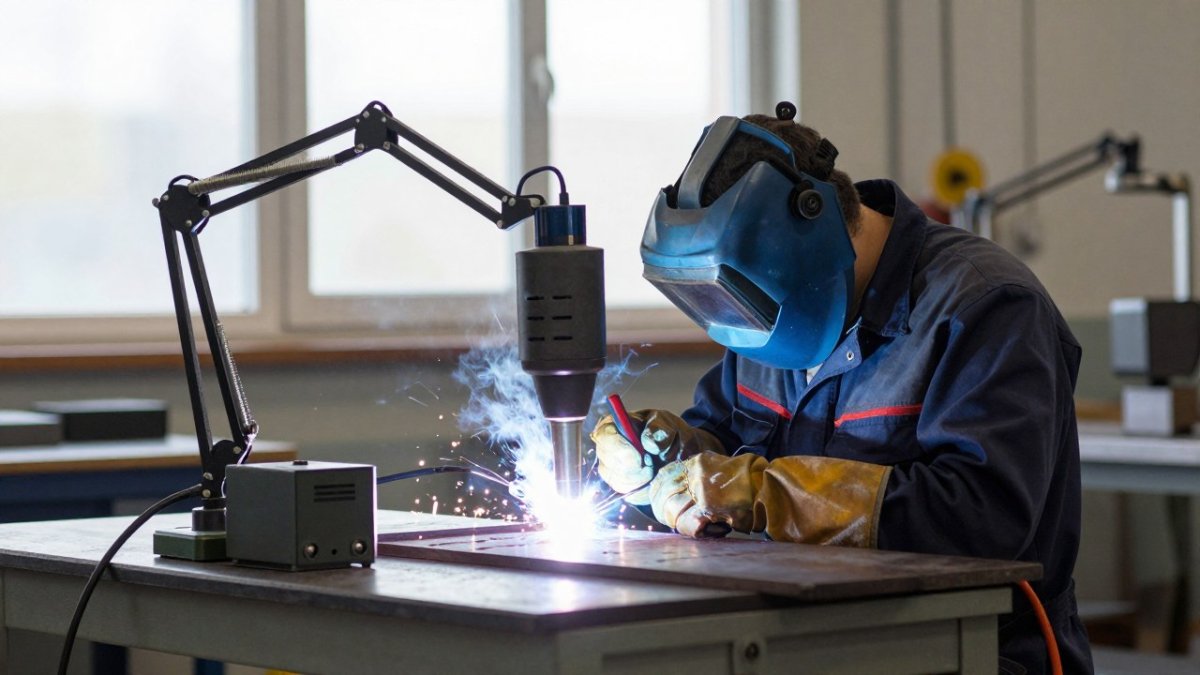
The AerService AER 110 is a compact portable extractor designed for workshop use. Check the current UK price with Norsemen Safety before you buy. Its compact footprint helps in smaller workshops where floor space is limited.
What the comparison does and does not tell you
A side-by-side table is only as good as the published data behind it. For four of the five units, the sources we reviewed did not publish airflow, filter stage or power draw, so the table shows where the evidence stops. That is deliberate: a shortlist that invents specifications is worse than one that names the gaps.
When you enquire, ask each supplier for the same four figures so you can compare like for like: quoted airflow in cubic metres per hour, the number of filter stages and their efficiency rating, the capture velocity at the arm mouth, and the sound pressure level at one metre. A common pattern is that quoted airflow is measured at the unit’s outlet, not at the welding point, so the figure that matters for fume capture is the velocity at the hood.
Watch out: a high quoted airflow can mask a poorly designed hood. If the capture velocity at the arm mouth is not stated, ask for it in writing before you compare two units on airflow alone.
Welding Extraction Arm Reach and Capture Point Options
Arm reach decides how close you can get the capture point to the arc, and that matters more than most buyers expect. A short arm that cannot reach the work pulls fume past the welder’s face. A longer arm gives flexibility but can lose some suction at the tip, so look for a unit whose arm length suits your typical workpiece size.
Ask Norsemen Safety which arm length fits your stations, since the right answer depends on how far the capture point needs to travel.
Welding Torch Fume Extraction: Matching Capture to Your Process
Fume extraction works best when the capture point sits as close to the source as possible. For MIG work, an on-torch extraction system pulls fume away at the arc itself and reduces how much escapes into the breathing zone.
If you mainly weld with TIG or stick, an on-torch system may not fit, and a mobile extractor with a well-placed arm is usually the better choice. Match the capture method to your process first, then choose the extractor that powers it.
Filter Replacement, Cleaning and Running Costs
Running costs often matter more than the purchase price. Filters need replacing or cleaning on a schedule, and that cost adds up over a year. Check whether the unit uses disposable or reusable filters before you buy, because the two types cost very differently over time.
The Extractability ProtectoXtra is described as having cleanable, reusable filters, which may reduce long-term running costs. Disposable-filter units need regular replacement, so factor the filter cost into your budget. Check the filter kit compatibility for your exact model before ordering, and dispose of used filters according to your local waste rules.
Confirm cleaning instructions with the manufacturer.
How filter stages map to welding processes
Most portable units use a staged filter train, and the stages you need depend on the process and the contaminant. A typical train runs a spark arrestor or metal pre-filter first, a main particulate filter second, and often a final polishing stage. The first stage protects the rest of the train from sparks and coarse spatter; the main stage does the fume capture; the final stage catches what passes through.
- MIG and MAG on mild steel: heavy particulate fume with some spatter. A spark arrestor plus a main particulate filter is the usual minimum, and a metal pre-filter helps where spatter is constant.
- Stick (MMA) welding: high fume volume and alkaline particulate. Expect shorter main-filter life and plan for more frequent replacement.
- TIG welding: low fume volume but ozone and fine particulate. A final polishing stage earns its place here more than on MIG.
- Stainless and coated steels: the fume can carry hexavalent chromium and nickel, so filter efficiency and containment during changeover matter more than on mild steel.
Recognising a loaded filter
A filter rarely fails suddenly. A common pattern is a slow loss of capture at the arm mouth, visible fume escaping the hood that was previously caught, a rising noise level as the fan works harder against a blocked filter, or a differential pressure gauge drifting into the red zone. Some units carry a filter-load indicator; where they do not, a monthly check of capture velocity at the hood is the practical substitute.
Watch out: cleaning a disposable filter to extend its life can damage the media and let fine particulate pass through. Only clean filters the manufacturer marks as cleanable or reusable.
Building a total cost of ownership figure
To compare units fairly, add four costs over a typical year: the purchase price, the filter replacement or cleaning cost at your expected change interval, servicing and any consumable pre-filters, and the electricity to run the fan. Ask the supplier for the filter part number and price, the recommended change interval at your duty level, and the unit’s power draw in kilowatts. Multiply the power draw by your hours of use and your electricity unit rate to get the annual energy cost. A unit with a higher purchase price but reusable filters and a lower power draw can work out cheaper over three to five years, which is the horizon most workshops should use.
Disposal
Used welding fume filters hold particulate that may include metal oxides and, on stainless or coated steels, hexavalent chromium compounds. Treat them as controlled waste, keep them in a sealed container until collection, and dispose of them through a licensed waste contractor in line with your duty of care. Do not shake or blow out a loaded filter in the workshop, as that puts the captured particulate back into the breathing zone.
Choosing the Right Portable Extractor for Your Workshop: Next Steps
Start by measuring the size of your workshop and the number of welding stations you need to cover. A single small bay may need only one compact unit, while a busy fabrication shop may need a higher-capacity model or more than one extractor. Next, decide how close the capture point must reach the arc, which tells you how long the arm should be. Finally, compare running costs, including filter replacement and cleaning, alongside the purchase price.
Norsemen Safety can help you narrow the choice. Our team can answer questions about which extractor, arm length and filter kit suit your workshop. Ready to find the right setup? Speak to the Norsemen Safety team about your workshop today.
Frequently Asked Questions
What is the best portable welding fume extractor for a workshop?
The best choice depends on workshop size, the welding process and how far the extraction arm needs to reach. For a small fabrication bay with one welding station, a compact unit with a flexible arm is usually sufficient. Larger workshops or those with several stations may need a higher-airflow model. Pricing varies with specification, quantity and delivery, so check the current price and availability on the Norsemen Safety website or request a quote before deciding.
How do portable welding fume extractors work?
A portable welding fume extractor draws contaminated air through a capture point, usually a flexible arm or hood placed close to the weld, then passes it through a filter before returning clean air to the room. Because the unit is on wheels or a stand, it can be moved between workstations. Effective capture depends on positioning the arm close to the arc, so the source of the fume is removed before it reaches the welder’s breathing zone.
How often should welding fume extractor filters be replaced?
Filter replacement intervals depend on how many hours the extractor runs, the type of welding and the metals involved. Most manufacturers recommend checking the filter regularly and replacing it when airflow drops noticeably or the pre-filter is clogged. Some units use cleanable filters that can be reused, which may lower long-term running costs. Follow the manufacturer’s maintenance instructions and keep records of filter changes as part of your general health and safety management.
Can a portable fume extractor replace local exhaust ventilation?
A portable extractor can provide local capture at the point of welding, but it does not replace a fixed local exhaust ventilation (LEV) system where one is needed. Under the Control of Substances Hazardous to Health (COSHH) Regulations, employers must assess exposure and control it, and LEV is often the appropriate control. Portable units suit changing work areas and small workshops, but their limitations, such as limited reach and capacity, should be assessed against your risk assessment.