
Table of Contents
- Why Electrode Selection Matters for Small Fabrication Work
- E6013 Welding Rods: Versatility for General-Purpose Fabrication
- E7018 Welding Electrodes: Strength and Penetration for Structural Work
- Stick Welding Rod Sizes and Thickness Matching
- Understanding Welding Electrode Polarity and Machine Setup
- Storage and Handling: Keeping Electrodes in Working Condition
- Matching Electrodes to Your Fabrication Projects
- Frequently Asked Questions
Last Updated: 11 October 2026
Why Electrode Selection Matters for Small Fabrication Work
Choosing the best welding electrodes for small fabrication shops determines whether your projects succeed or fail. The electrode you select affects weld quality, penetration, ease of application, and overall project cost. Small fabrication operations don’t have the luxury of wasting materials or time on unsuitable consumables.
Fabrication shop owners need practical guidance on electrode selection. Your choice depends on the base metal you’re joining, the thickness of the material, the joint position, and your equipment’s capabilities. A poor electrode choice leads to weak welds, excessive spatter, or difficult cleanup that eats into your profit margins. Choosing the best welding electrodes is important
The best welding electrodes for small fabrication shops balance performance with ease of use. You need consumables that work reliably across varied project types without requiring constant equipment adjustments. This guide covers the most practical electrode options for general-purpose and structural fabrication work, helping you stock your shop with the right consumables.
E6013 Welding Rods: Versatility for General-Purpose Fabrication
The E6013 is one of the most versatile electrodes available for small fabrication work. This electrode delivers consistent results across many applications, making it an excellent choice when you’re working with different materials and thicknesses in the same week.
E6013 electrodes produce a fluid weld pool that’s easy to control, even for less experienced welders. The slag coating breaks away cleanly, reducing cleanup time between passes. Many fabricators choose E6013 because the electrode works well in all positions, flat, vertical, overhead, and horizontal. This versatility means you can tackle corner joints, T-joints, and butt welds without changing consumables.
The penetration characteristics of E6013 rods make them suitable for lighter structural work and general fabrication. They’re particularly effective on thin to medium-thickness mild steel. However, E6013 electrodes don’t provide the deep penetration needed for heavy structural applications or thick plate work. If your typical projects involve sheet metal, brackets, frames, or decorative ironwork, E6013 rods will serve you well.
Stock E6013 in 2.4mm and 3.2mm diameters first. These sizes cover the majority of small shop projects without requiring multiple electrode types.
E7018 Welding Electrodes: Strength and Penetration for Structural Work
E7018 electrodes deliver higher tensile strength than E6013, making them essential when structural integrity matters. These rods are the best welding electrodes for small fabrication shops handling load-bearing components, frames that support weight, or work requiring certification to structural standards.
The E7018 electrode produces deeper penetration into the base metal, creating stronger welds that can handle stress and vibration. The slag is slightly tougher to remove than E6013, but the superior strength justifies the extra clean up effort. E7018 rods work best in flat and horizontal positions, though they can be used vertically with proper technique. Many fabricators consider E7018 the standard choice for structural steel work.
E7018 electrodes require slightly more stable equipment and better technique than E6013. Your power source needs adequate amperage capacity, and maintaining proper arc length becomes more critical. For shops with quality equipment and experienced welders, E7018 delivers the performance needed for demanding projects. The electrode costs more per unit than E6013, but the superior strength often justifies the investment for work that carries liability or safety concerns.
When a fabrication project involves structural loads, safety-critical components, or client specifications requiring high-strength welds, E7018 electrodes are the right choice despite their higher cost.
Stick Welding Rod Sizes and Thickness Matching
Selecting the correct electrode diameter directly affects your welding success and material waste. Small fabrication shops typically work with four standard sizes: 1.6mm, 2.4mm, 3.2mm, and 4.0mm diameter rods. Each size suits specific material thicknesses and joint configurations.
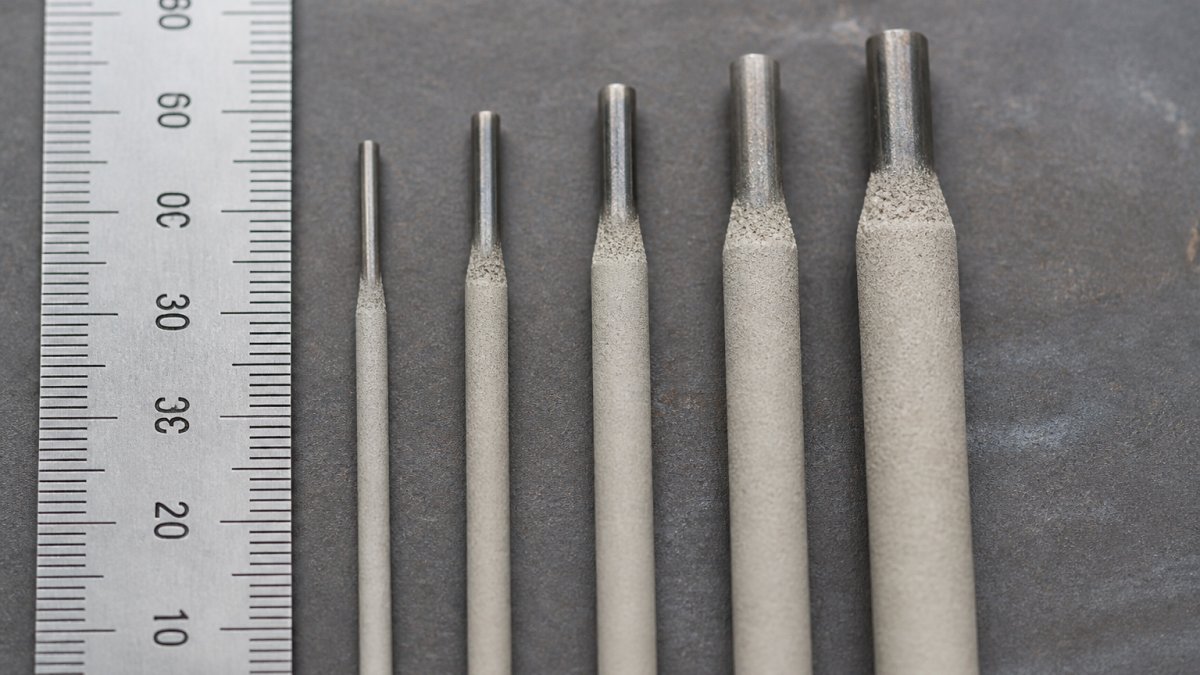
Use 1.6mm electrodes for thin materials below 2mm thickness and for root passes on thicker joints. The small diameter allows precise control and reduces heat input that can distort thin metal. For general fabrication work on material between 2mm and 4mm thick, 2.4mm rods provide good control and deposition rates. Material between 4mm and 6mm thick benefits from 3.2mm electrodes, which deposit more metal per pass and reduce the number of passes needed. For heavy plate work above 6mm, 4.0mm or larger electrodes become necessary, though most small shops rarely use sizes beyond 4.0mm.
Matching electrode size to material thickness prevents common problems. Undersized electrodes on thick material require excessive passes, increasing labour costs and heat input. Oversized electrodes on thin material cause burn-through and distortion. A practical approach is stocking 2.4mm and 3.2mm rods as your primary sizes, then adding 1.6mm for precision work and 4.0mm for occasional heavy projects.
Understanding Welding Electrode Polarity and Machine Setup
Electrode polarity determines whether your power source’s positive or negative terminal connects to the electrode, and this choice affects arc characteristics and weld quality. Most stick electrodes used in small fabrication shops work with direct current electrode positive (DCEP), commonly called reverse polarity. DCEP provides deeper penetration and better arc stability than direct current electrode negative (DCEN).
Your equipment’s amperage setting must match the electrode size you’re using. Undersized amperage produces a weak arc that won’t melt the base metal properly, resulting in poor fusion and weak welds. Excessive amperage causes the electrode to melt too quickly, creating spatter and making the arc difficult to control. Electrode manufacturers provide amperage ranges for each size, follow these recommendations to achieve consistent results.
Many small shops use alternating current (AC) equipment, which works with most electrodes but produces slightly more spatter than DC. If your existing equipment is AC-only, select electrodes specifically rated for AC operation. Upgrading to DC equipment improves arc quality and reduces consumable waste, though the investment may not justify itself for low-volume shops.
Operating at incorrect amperage settings wastes electrodes and produces weak welds that may fail under load. Always check the electrode manufacturer’s specification label before adjusting your machine.
Storage and Handling: Keeping Electrodes in Working Condition
Electrode storage directly affects weld quality because moisture and contamination degrade the flux coating. Small fabrication shops should store electrodes in a dry environment, ideally in sealed containers or a dedicated storage cabinet. Humidity causes the flux coating to absorb moisture, which creates porosity in the weld and reduces mechanical properties.
Once you open an electrode container, use the contents within a reasonable timeframe. Opened packages exposed to shop air gradually absorb moisture. If you notice the flux coating looks damp or discoloured, the electrodes have deteriorated. Using compromised electrodes wastes time and material because the resulting welds develop defects.
Handle electrodes carefully to avoid damaging the flux coating. Dropping rods or striking them against hard surfaces cracks the coating, allowing moisture penetration. Store rods vertically in their original containers when possible, keeping them organised by type and size. A well-organised electrode storage system saves time during project setup and prevents accidental use of wrong electrode types.
Matching Electrodes to Your Fabrication Projects
Different fabrication projects demand different electrode choices based on material type, thickness, position, and performance requirements. Understanding your typical project mix helps you stock the right consumables without excess inventory.
For general fabrication work involving mild steel brackets, frames, gates, and decorative components, E6013 electrodes in 2.4mm and 3.2mm sizes handle most applications. These projects typically involve thin to medium-thickness material welded in accessible positions. E6013 rods’ ease of use and fast slag removal make them cost-effective for high-volume general work.
When your projects include structural components, load-bearing frames, or work requiring structural certification, E7018 electrodes become necessary. These rods deliver the strength and penetration that safety-critical work demands. The additional cost per electrode is offset by reduced rework and stronger finished products that meet structural standards.
Heavy fabrication involving thick plate, pipe work, or specialised applications may require electrode types beyond E6013 and E7018. As your shop grows, you might add E7024 electrodes for flat-position heavy work or stainless steel electrodes for corrosion-resistant applications. Start with the two core types, then expand your consumable range as project diversity increases.
| Project Type | Best Electrode | Typical Size | Key Advantage |
|---|---|---|---|
| General brackets and frames | E6013 | 2.4mm-3.2mm | Easy control, fast cleanup |
| Structural steel work | E7018 | 3.2mm-4.0mm | High strength, deep penetration |
| Thin sheet metal | E6013 | 1.6mm-2.4mm | Precise control, minimal distortion |
| Overhead or vertical joints | E6013 | 2.4mm | Excellent position capability |
Selecting the best welding electrodes for small fabrication shops comes down to understanding your equipment, material types, and project requirements. E6013 and E7018 rods cover the vast majority of small shop applications, offering reliable performance across diverse fabrication tasks. Stock these core electrodes in practical sizes, store them properly, and match your machine settings to the electrode specifications.
Norsemen Safety supplies a comprehensive range of welding consumables and equipment for fabrication professionals across the UK and Ireland. Shop now to stock your fabrication operation with quality electrodes that deliver consistent results on every project.
Frequently Asked Questions
What is the difference between E6013 and E7018 electrodes?
E6013 welding rods are general-purpose electrodes suited to thin materials and light fabrication work, offering easy striking and low spatter. E7018 welding electrodes deliver higher tensile strength and deeper penetration, making them better for structural work and thicker steel. Choose E6013 for sheet metal and repairs; use E7018 when strength and durability are critical. Your machine’s output and the material thickness determine which is appropriate for each job.
What size welding rod should I use for different material thicknesses?
Stick welding rod sizes range from 1.6mm to 4.0mm diameter. For sheet metal and thin sections under 3mm, use 1.6mm or 2.4mm rods. For general fabrication on 3-6mm material, 2.4mm or 3.2mm rods work well. Thicker sections above 6mm require 3.2mm or 4.0mm electrodes. Larger rods carry more current and create deeper penetration but need more machine power. Always match your electrode size to your machine’s output range and the base metal thickness to avoid poor fusion or burn-through.
How should welding electrodes be stored to keep them dry?
Store electrodes in a dry environment, ideally in sealed containers or cabinets with humidity control below 50%. Keep them away from damp workshops, outdoor storage, or areas near water sources. Low-hydrogen electrodes like E7018 are especially moisture-sensitive and should be stored in heated cabinets if possible. Before use, inspect rods for signs of moisture absorption such as visible corrosion or discolouration. Damaged or wet electrodes produce weak welds and spatter, so proper storage directly affects weld quality and material waste on your small fabrication jobs.
Can small welding machines handle E7018 electrodes?
Most small welding machines can use E7018 electrodes, but you must check your machine’s maximum output rating and use the correct rod diameter. Smaller machines typically work best with 2.4mm or 3.2mm E7018 rods rather than 4.0mm. Verify your machine’s amperage range matches the electrode specifications on the packet. If your machine is underpowered, you’ll struggle with arc stability and weak penetration. Consult your machine manual or contact a supplier for guidance on compatible electrode sizes for your specific equipment.