
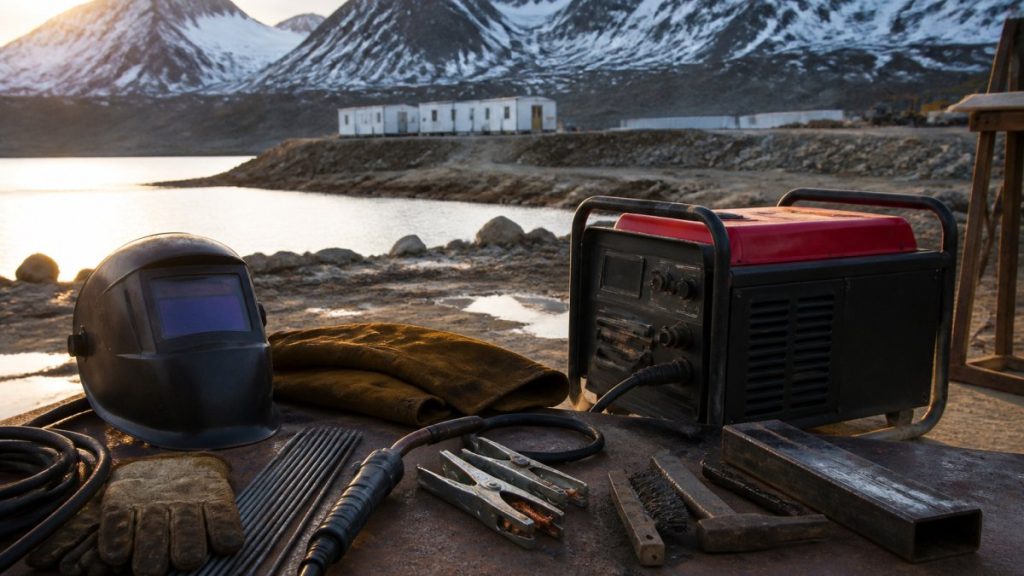
Quick Summary
Remote sites need a welding setup planned around power, machine, consumables, protection and spares, all checked against the worst conditions you expect. A portable machine suited to the job, a generator sized with headroom, and sealed, organised consumables keep work moving where no spare parts or mains supply are close by.
- Size the generator to its continuous rating, with at least 25-30% headroom above the total load.
- Match the process to the job: MMA for rugged outdoor work, MIG for thicker steel, TIG for stainless and aluminium.
- Carry fuel for the whole job plus a margin, along with spare air and fuel filters.
- Store electrodes sealed and dry, because damp rods cause porous welds.
- Tell someone your location and check-in schedule when working alone on a remote site.
Table of Contents
- Why Remote Sites Need a Different Welding Setup
- Choosing a Portable Welding Machine for Field Work
- Planning a Remote Welding Power Supply
- Building a Field Welding Equipment Checklist
- Storing and Transporting Welding Consumables on Site
- Safety, PPE and Compliance Away from the Workshop
- Packing Your Remote Site Kit Before the Next Job
- Frequently Asked Questions
What Welding Gear Do Remote Sites Actually Need?
Last Updated: 1 November 2026
Why Remote Sites Need a Different Welding Setup
Welding gear for remote sites has to do more than the same job it does in a workshop.
That changes how you should buy. A machine that suits a fabrication bay may fail you on a pipeline job in the middle of nowhere.
Here is the core idea. Plan the whole setup before you leave: power, machine, consumables, protection and spares.
Choosing a Portable Welding Machine for Field Work
A portable machine is the heart of a remote kit. Pick it for the work you will actually do, not the work you hope to do someday.
Most field welders weigh the same few things. Look at them in this order:
- Process range: Can it run the processes your jobs need?
- Power draw: Will it run on the supply you have on site?
- Weight: Can one person lift and carry it safely?
MMA, MIG and TIG: Matching the Process to the Job
Each process suits different work. Match the process to the job, not to the machine’s brochure.
- MMA (stick): Simple, rugged and tolerant of dirty or rusty metal. It works well outdoors in wind, which makes it a common field choice.
- MIG: Fast on thicker steel and good for production runs. It needs gas and shelter from wind to work cleanly.
- TIG: Gives the cleanest, most precise welds on stainless and aluminium. It is slower and asks more skill from the operator.
Weight, Duty Cycle and Durability
Duty cycle tells you how long a machine can weld before it must cool. A low duty cycle means stopping often, which slows a remote job badly.
Weight matters because someone has to carry the kit up a ladder or across rough ground. Heavier does not always mean better built.
The main welding processes suit different field work, and each brings its own trade-offs.
|
Process |
Best for |
Key difference |
|---|---|---|
|
MMA (stick) |
Outdoor and dirty or rusty metal |
Simple, rugged and tolerant of wind |
|
MIG |
Thicker steel and production runs |
Fast, but needs gas and shelter from wind |
|
TIG |
Stainless steel and aluminium |
Cleanest, most precise, but slower and more skilled |
Planning a Remote Welding Power Supply
Power is the most common reason field welding fails. A machine is only as good as the generator or supply behind it, and on a remote site you cannot borrow a bigger set from the next bay. Plan the power source as carefully as the welder itself.
Work Out the Real Load First
Start with the machine’s data plate, not the brochure headline. You need the rated input current at the voltage you will actually use, plus the start-up surge that inverters and transformer sets draw. Add the draw of a grinder, work lights and a charger, because they will all run off the same set.
A practical method:
- List every item that will run at once, welder, grinder, lights, phone charger, any extraction.
- Note each item’s rated input current and add them together.
- Add headroom of at least 25-30% for surge and for the fact that generators dislike running flat out for hours.
- Check the generator’s continuous (prime) rating, not its peak rating, against that figure.
Engine-Driven Welders Versus Generator Plus Inverter
There are two common routes, and each suits different work.
- Engine-driven welder: A single unit that generates power and welds. It is rugged, self-contained and popular on pipeline and structural work where the machine travels with the job. The trade-off is weight, fuel consumption and the fact that one fault can take out both welding and auxiliary power.
- Generator plus separate inverter welder: More flexible. You can replace either part independently, and a modern inverter is light and efficient. The catch is compatibility, some generators produce a modified or unstable output that upsets sensitive inverter electronics. Check that the generator gives a clean, stable supply and that the welder’s manual accepts generator power.
A common pattern on smaller remote jobs is a mid-size inverter welder paired with a generator sized with headroom, plus a small auxiliary set for lights and tools. On larger jobs, an engine-driven set often wins on simplicity.
Fuel, Oil and Filters for the Whole Job
Fuel planning is where remote jobs quietly fail. Work out consumption from the set’s rated fuel use at the load you expect, then multiply by the hours you will run, including idle time, warm-up and the fact that cold starts and heavy loads drink more.
- Carry fuel for the whole job plus a margin, in approved containers, and store it away from the welding area.
- Carry engine oil, a spare air filter and a spare fuel filter. Dusty sites clog filters fast.
- Take a funnel, a spill kit and gloves, refuelling a hot engine is a fire risk, so let it cool first.
Test the Full Setup Before You Leave
Run the complete arrangement, generator, welder, leads, grinder and lights, at your workshop under load before it goes out. Confirm the welder strikes and runs cleanly, that the generator holds voltage under surge, and that every cable and plug is sound. Finding a fault at the workshop costs minutes. Finding it on a remote site costs the job.
Building a Field Welding Equipment Checklist
A written checklist stops the forgotten item from ruining the trip. Build yours around the job, then tick it off on the morning you leave.
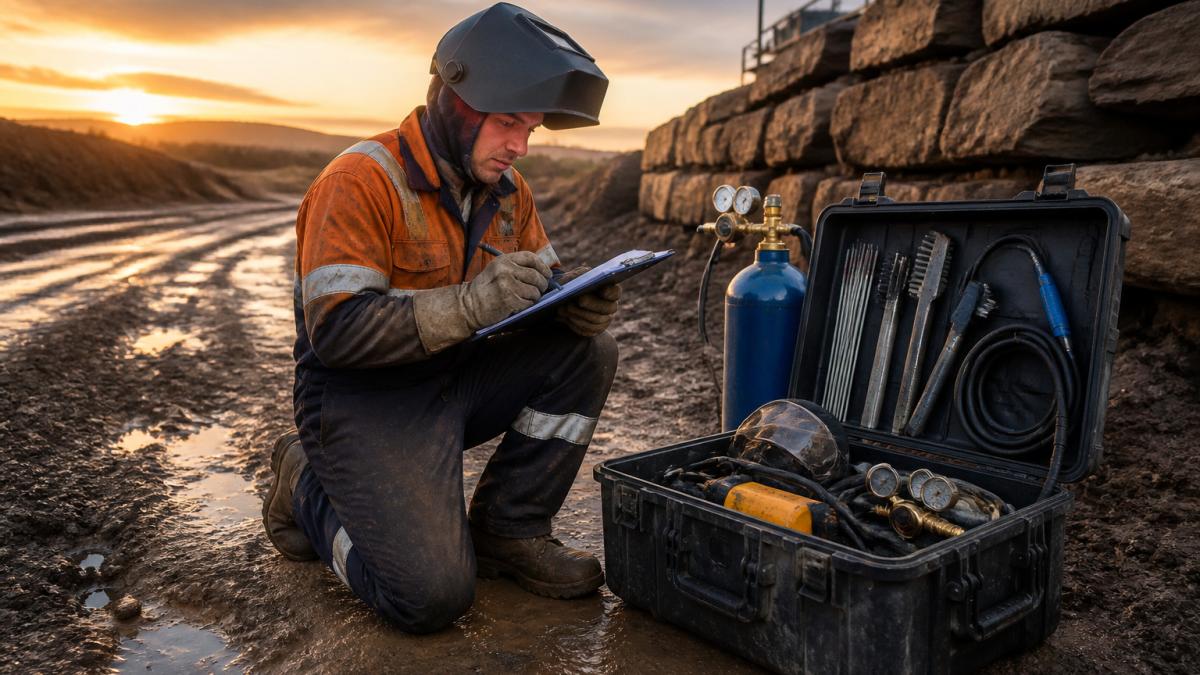
Use this as a starting point:
- Welding machine, with spare cable set
- Generator or confirmed power supply, with fuel
- Electrodes, wire and gas for every process you will run
!A welder in work clothing checking items off a clipboard beside an open, organised equipment case on a muddy site track at dawn
Storing and Transporting Welding Consumables on Site
Consumables are the items that run out first. Keep them dry, sealed and organised, or they will fail you when you need them most.
Electrodes absorb moisture from damp air, which causes porous welds. Store them in sealed containers or a heated rod oven if the job calls for it.
Label every box by size and type. Keep a running count so you know when to reorder before you run dry on site.
Safety, PPE and Compliance Away from the Workshop
Remote sites carry the same welding hazards as workshops, with fewer people nearby to help and longer waits for assistance. Plan for that before you deploy, not after something goes wrong.
Core PPE and Fume Control
Your baseline protection is a welding helmet with the correct shade for the process and current, flame-resistant clothing, leather gloves, sleeves and safety boots. But PPE is the last line of defence, not the first.
Welding fume is a serious health hazard, and the Health and Safety Executive’s guidance is clear that exposure should be controlled at source (Welding fume: protect your workers).
Hot-Work Controls and Fire Prevention
Welding throws sparks and hot slag further than most people expect. On a remote site, a fire can spread before anyone notices and help may be hours away.
- Clear a radius around the work of dry grass, timber, packaging and fuel.
- Use fire blankets to protect surfaces and to smother small fires.
- Keep a suitable extinguisher within reach and check it is in date before you leave.
Electrical Safety in the Field
Generators, extension leads and damp ground are a dangerous combination. Use RCD protection on portable supplies, keep leads off the ground where possible, inspect cables for damage before every use, and never run a welder from a set that is not earthed and rated for the load. Keep the work area dry and stand on dry boards or matting where the ground is wet.
Working Alone and Emergency Planning
This is the risk competitors rarely cover. When you are the only person on site, a burn, an eye injury or a fall can become life-threatening simply because no one knows you are in trouble.
- Tell someone your location, your expected finish time and your check-in schedule.
- Carry a charged phone or radio, and know whether there is signal where you will work.
- Have a first-aid kit suited to burns and eye injuries, and know how to use it.
Compliance Checks Before You Deploy
Check the rules that apply to your work before you leave. Official UK health and safety guidance covers welding fume, PPE, working at height and confined spaces, and your own risk assessment should reflect the specific site. Reading it before you deploy protects both your team and your schedule, and on a remote site, a compliance gap is far harder to fix once you are there.
Packing Your Remote Site Kit Before the Next Job
Pack the kit in the order you will need it on site. Put the machine, cables and PPE where they come out first.
Once packed, run one last check against your list. Test the machine, check the generator starts and confirm the gas flows.
Keep a spare-parts list in the kit, and review it after every trip. Each job will show you what you forgot, so update the list.
Frequently Asked Questions
What equipment do you need for welding on a remote site?
A typical remote setup includes a portable welding machine matched to your process, a power source suited to the site, leads and earth clamps of adequate length, a supply of electrodes or wire, a wire feeder if using MIG, a grinder and cutting tools, and a full set of PPE including a welding helmet, gloves, flame-resistant clothing and eye protection. Pack spares for consumables that wear quickly, such as contact tips and nozzles. Work out the list from the job itself rather than packing everything, because weight and transport space are real constraints on remote work. Pricing for equipment depends on specification, quantity and delivery, so check current prices and availability directly with Norsemen Safety.
How do you choose a portable welder for field work?
Start with the process: MMA is robust and tolerant of wind and dirty steel, MIG is faster on thinner material, and TIG suits precision work on stainless steel and aluminium. Then check the duty cycle, which tells you how long the machine can weld at a given current before it needs to cool. Weight matters if the machine must be carried any distance, and the mains or generator input the machine accepts decides what power you can run it from. Durability in terms of enclosure, cable strain relief and sealing against dust and moisture is worth checking before you commit.
What power supply is needed for remote-site welding?
Many portable welders are rated for a single-phase supply, and the input current rating on the machine plate tells you the generator size you need, typically with headroom above the welder’s maximum draw. Engine-driven welders combine the welder and generator in one unit and avoid a separate power source. Check the generator’s output quality if you use it with inverter welders, as unstable voltage can cause faults. Confirm the requirement against the machine’s specification and the site’s electrical arrangements, and get advice from a competent electrician where a temporary supply is involved.
How should welding consumables be stored and transported on site?
Keep electrodes in sealed, dry containers, because moisture-sensitive low-hydrogen electrodes need to be stored in a rod oven or sealed packs to avoid hydrogen cracking. Keep aluminium wire and MIG wire protected from dust and moisture, and store gas cylinders upright, secured and away from heat. Lay out consumables in a case or box inside the vehicle so they do not shift and damage the packaging. Rotate stock so older packs are used first, and log what you take out so you know when to reorder before the next job.