
Table of Contents
- Why Safety Gear Matters on Construction Sites
- Understanding PPE at Work Regulations 1992
- Essential Welding Safety Gear for Construction
- Construction Site Safety Equipment Checklist
- Selecting the Right Safety Gear for Your Team
- Inspection and Maintenance of Safety Equipment
- Frequently Asked Questions
Last Updated: October 9, 2026
Why Safety Gear Matters on Construction Sites
Safety gear for construction sites isn’t optional. It’s the difference between going home healthy and facing serious injury or worse. Construction work exposes people to falls, flying debris, chemical hazards, and equipment that can cause permanent damage in seconds.
The reality is stark. Accidents happen quickly. A moment of inattention, a slip on a wet surface, or exposure to harmful dust can change everything. The right safety gear for construction sites acts as your last line of defence when systems fail or unexpected hazards emerge.
At Norsemen Safety, we’ve worked with construction teams across the UK and Ireland for over 40 years. Proper protective equipment isn’t about compliance alone, it’s about people going home to their families at the end of every shift.
Understanding PPE at Work Regulations 1992
The PPE at Work Regulations 1992 set out the legal framework for personal protective equipment in the UK (Extended scope of the Personal Protective Equipment at Work Regulations). Employers have a duty to assess workplace hazards and provide appropriate protective equipment at no cost to workers.
These regulations require that PPE be:
- Properly assessed for the specific hazard
- Maintained in good working order
- Stored correctly to prevent damage
- Replaced when damaged or worn
- Provided with clear instructions on use
The regulations apply to all workplaces where hazards exist. Construction sites fall squarely within this scope. Non-compliance isn’t just a safety issue, it’s a legal liability. Employers who fail to provide adequate safety gear for construction sites face enforcement action and potential prosecution.
Your responsibility doesn’t end at purchase. You must ensure workers understand how to use equipment correctly and that it’s inspected regularly. Documentation matters. Keep records of equipment inspections, replacements, and training.
Failing to comply with the PPE at Work Regulations 1992 can result in enforcement notices from the Health and Safety Executive. Serious breaches may lead to prosecution and substantial fines. More importantly, workers face real injury when regulations are ignored.
Essential Welding Safety Gear for Construction
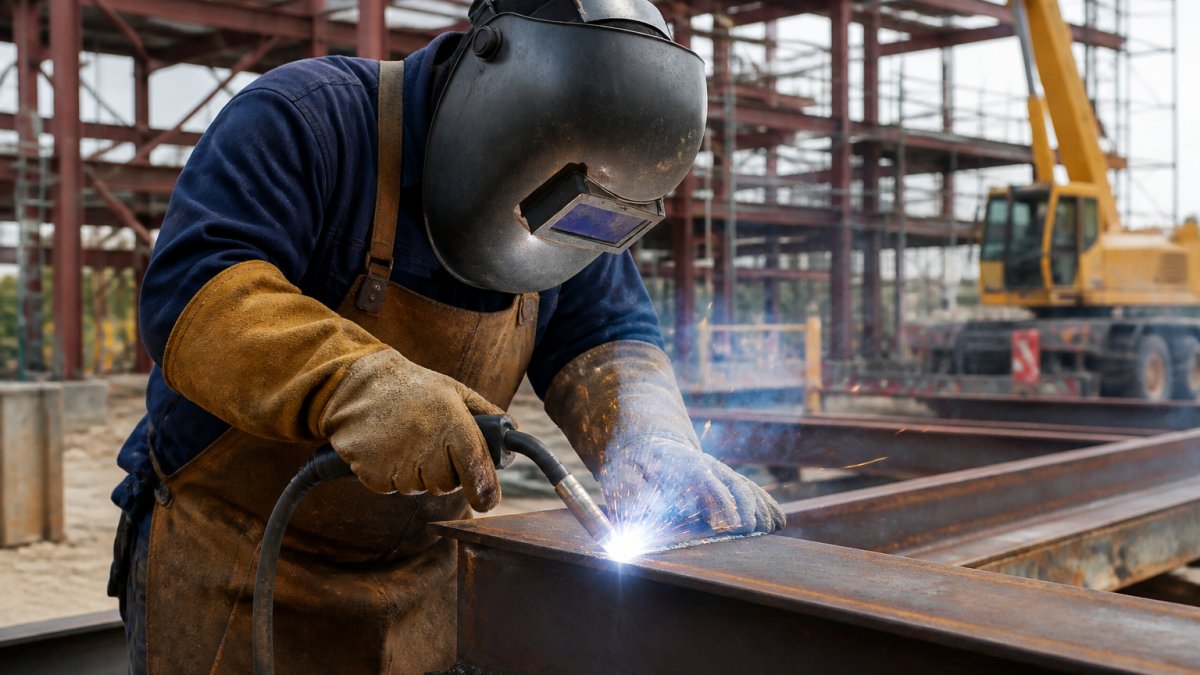
Welding safety gear for construction protects against extreme heat, ultraviolet radiation, sparks, and molten metal. Different welding processes present different hazards, so your safety gear for construction sites must match the specific work being performed.
Head and Eye Protection
Welding helmets protect your eyes and face from arc flash and flying debris. The lens must have the correct shade number for the welding process, too light and your eyes suffer damage, too dark and you can’t see the work.
Auto-darkening helmets are worth the investment. They switch instantly when the arc strikes, eliminating the need to flip the helmet up and down. This reduces neck strain and improves work quality. Standard passive helmets cost less upfront but increase fatigue over a full shift.
Safety glasses with side shields should be worn underneath the helmet for additional protection. Many welders wear them even when not actively welding to guard against unexpected sparks. Prescription glasses can be fitted with safety lenses if needed.
Respiratory Protection
Welding fumes contain manganese, chromium, and other metals that damage lungs with repeated exposure (Health risks from welding). Respiratory protection is essential for indoor welding or when working in poorly ventilated areas.
Half-mask respirators with appropriate cartridges offer practical protection for most construction welding. Cartridges must match the specific hazard, dust cartridges won’t protect against fumes. Replace cartridges regularly and check seals before each use.
Supplied air respirators provide the highest protection but are bulkier and more expensive. Use them for extended welding in enclosed spaces or when working with particularly hazardous materials. Ensure adequate air supply and check hoses for damage before starting work.
Hand and Body Protection
Welding gloves must be made from leather or other heat-resistant material. Cotton or synthetic materials melt under arc heat. Gloves should extend well up the wrist to prevent sparks from entering. Inspect them regularly for holes or thin spots.
Welding aprons and jackets protect your torso and legs from sparks and molten metal. Heavy leather offers better protection than canvas, though it’s less flexible. Choose based on the intensity of work, light fabrication may allow lighter protection, but heavy structural welding demands premium materials.
Closed-toe boots with non-slip soles are mandatory. Steel toe caps protect against dropped tools and falling objects. Ensure trousers cover your boots, exposed skin allows sparks to enter and cause burns.
Keep your safety gear for construction sites clean and dry. Damp leather loses its protective properties and conducts heat. Store gloves and aprons away from direct heat to prevent damage between shifts.
Construction Site Safety Equipment Checklist
A complete safety gear for construction sites inventory covers multiple hazard categories. Use this checklist to ensure your team has what they need:
| Equipment | Purpose | Inspection Frequency |
|---|---|---|
| Welding helmet | Eye and face protection from arc | Before each use |
| Safety glasses | Secondary eye protection | Weekly |
| Respirator with cartridges | Protection from welding fumes | Before each use |
| Welding gloves | Hand protection from heat and sparks | Before each use |
| Welding apron or jacket | Torso protection from molten metal | Weekly |
| Safety boots with steel toe | Foot protection from impact | Weekly |
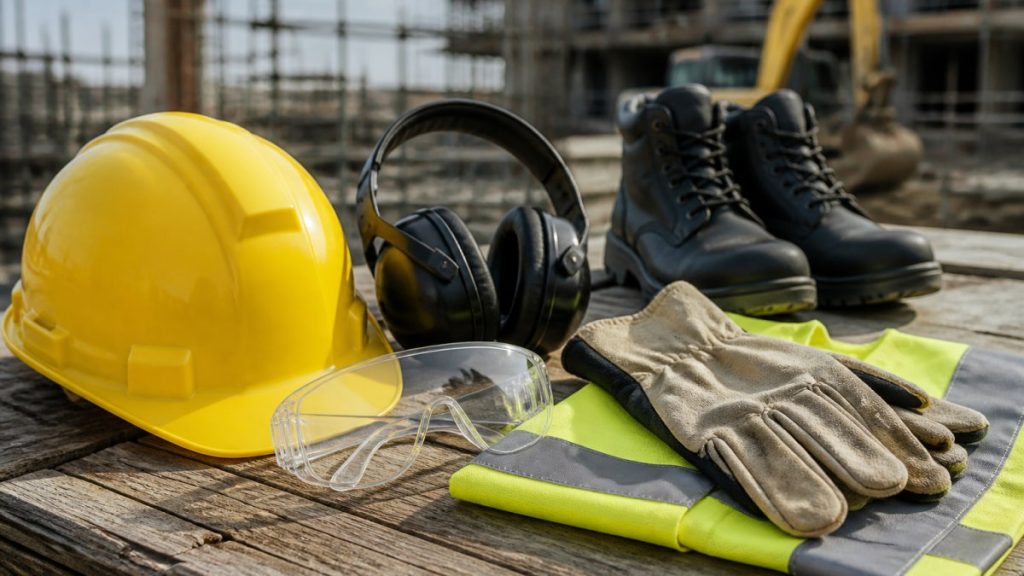
| Hard hat | Head protection from falling objects | Before each use |
| High-visibility clothing | Visibility to equipment operators | Daily |
| Hearing protection | Protection from loud equipment | Before each use |
| First aid kit | Treatment of minor injuries | Monthly |
Beyond personal protective equipment, construction sites need fixed safety measures. Guardrails, safety netting, and proper scaffolding reduce the risk of falls. Proper housekeeping, removing trip hazards and keeping work areas clear, prevents accidents before they happen. Maintaining these site-wide safety standards becomes even more critical when managing the unique logistical challenges of solo construction work.
Selecting the Right Safety Gear for Your Team
Choosing safety gear for construction sites means matching equipment to actual hazards on your specific site. A one-size-fits-all approach fails because different work presents different risks.
Start with a hazard assessment. Walk your site and identify what could go wrong. Are workers at height? Is there welding happening? Are there chemical hazards? Is noise a concern? Each hazard requires specific protective measures.
Involve your team in the selection process. Workers know what works in practice. Equipment that’s uncomfortable gets removed or avoided, defeating its purpose entirely. Consult them on fit, comfort, and usability.
Quality matters more than price when it comes to safety. Cheap equipment often fails when you need it most. Norsemen Safety stocks trusted brands that professionals rely on because they perform consistently. Our team can help you select the right equipment for your specific needs rather than leaving you to guess.
Consider your workers’ experience levels. New team members need clear, simple equipment that’s hard to use incorrectly. Experienced workers may prefer more sophisticated options that offer better performance. Training requirements vary, ensure everyone knows how to use and maintain their equipment properly.
The best safety gear for construction sites is the equipment your team will actually wear and maintain. Involve workers in selection, choose reliable brands, and provide training on proper use.
Inspection and Maintenance of Safety Equipment
Safety gear for construction sites deteriorates with use. Regular inspection catches problems before they cause failures. Establish a maintenance routine and stick to it.
Welding helmets need lens inspection for cracks or discolouration. Auto-darkening lenses can fail, test them regularly by looking at bright light to confirm they darken. Replace damaged lenses immediately. Check the helmet shell for cracks that might let sparks in.
Respirator cartridges have limited life. Once saturated, they no longer filter effectively. Follow manufacturer guidance on replacement intervals, typically every 40 hours of use or when you notice resistance to breathing. Store cartridges in sealed containers to prevent premature saturation.
Gloves and protective clothing should be replaced when they show signs of wear. Small holes or thin spots compromise protection. Leather items can be cleaned and conditioned to extend life, but once damaged, replacement is safer than repair.
Document all maintenance and replacements. This creates a record that demonstrates compliance with regulations and helps identify equipment that fails prematurely. If a particular brand consistently fails, you’ll have evidence to switch suppliers.
Train workers on basic inspection. They should check their own equipment before starting work. A quick visual scan takes seconds and catches obvious problems. Make it part of the routine, like checking equipment before starting any task.
Safety gear for construction sites protects your most valuable asset, your people. Proper equipment, combined with training and maintenance, creates a culture where workers go home safely every day. Norsemen Safety provides the full range of protective equipment you need to meet regulations and keep your team protected. Our experienced team can help you select the right safety gear for construction sites. Contact us today to discuss your site’s specific safety requirements and find the equipment that works for your operation.
Frequently Asked Questions
What are the legal requirements for safety gear on construction sites?
Employers must comply with the PPE at Work Regulations 1992, which require provision of suitable personal protective equipment to all workers. The specific gear depends on identified workplace hazards. A risk assessment must determine what safety gear is necessary, and employers must provide it free of charge. Workers must be trained in proper use and maintenance. The Health and Safety at Work etc. Act 1974 reinforces these duties, making compliance non-negotiable for all construction operations.
How often should construction safety equipment be inspected?
Inspection frequency depends on the equipment type and use intensity. Welding equipment should be inspected daily before operation. Damaged or worn gear must be removed from service immediately. Maintaining a documented inspection log demonstrates compliance and protects your team.
Who is responsible for providing and maintaining safety gear on site?
The employer is legally responsible for providing all necessary safety gear at no cost to workers under the PPE at Work Regulations 1992. This includes purchasing, maintaining, cleaning, and replacing damaged equipment. Site managers must ensure gear is available and properly fitted. Workers have a responsibility to use it correctly and report damage. Shared responsibility between management and workers creates a safer site culture where everyone understands the importance of compliance.
What makes welding safety gear different from general construction PPE?
Welding creates specific hazards including intense heat, sparks, ultraviolet radiation, and fumes requiring specialist protection. Welders need auto-darkening helmets with appropriate shade ratings, leather gloves rated for heat, and respiratory protection against welding fumes. General construction workers may need hard hats and high-visibility clothing but not heat-resistant gear. The hazard assessment determines which specialised welding safety gear is essential, and workers need training specific to that equipment’s use.